Table Of Contents
-Why Nutrition Matters During Months 4–6
-Baby's Development in the Second Trimester
-Essential Nutrients
-Indian Diet Chart
-Healthy weight gain.
-TinyTyke Pregnancy Tip:
-Key Takeaways
-FAQs
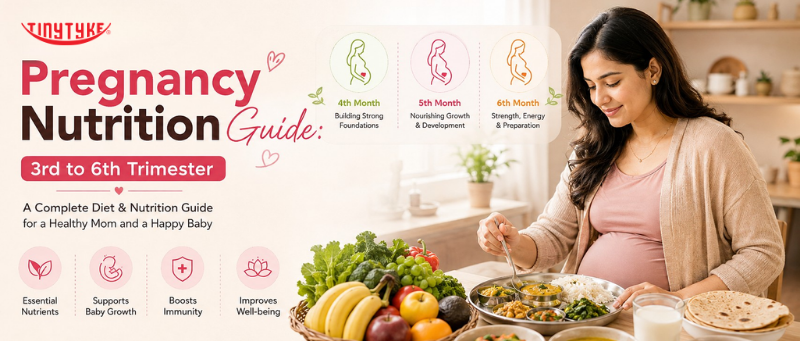
Pregnancy Nutrition Guide: Months 4-6 (Second Trimester)
Congratulations! You have entered the second trimester, which is widely regarded as the most comfortable stage of pregnancy. Morning sickness normally improves, your energy levels recover, and your baby begins to grow quickly.
Between the fourth and sixth months, your baby's bones strengthen, muscles expand, facial characteristics sharpen, and movements become more visible. During this time, your nutritional requirements rise to meet your baby's rapid growth while keeping you healthy and energized.
Rather than eating much more, prioritize balanced, nutrient-dense meals that include protein, vitamins, minerals, healthy fats, and fiber.
Baby's Development in Months 4–6
During the second trimester, your baby grows significantly.
Fourth Month
Bones start to solidify.
Facial characteristics become more distinctive.
Muscles continue to develop.
Baby starts to move more aggressively.
Fifth Month
The baby's hearing develops.
Hair and brows begin to form.
Muscles get stronger.
You may start to feel regular baby kicks.
Sixth Month
The brain develops rapidly.
Lungs continue to mature.
The eyes begin to respond to light.
Fat starts to form beneath the skin.
Maintaining a balanced diet becomes increasingly crucial as your baby's nutritional needs grow.
Essential Nutrients for Months 4–6
Protein
Protein aids your baby's developing muscles, organs, placenta, and tissues.
Good sources:
Paneer
Eggs
Milk
Lentils
Rajma
Soy products
Chicken
Fish (lower mercury variations)
Aim to include a protein source in each meal.
Iron
During pregnancy, your blood volume grows dramatically, thus iron is crucial for preventing anemia.
Iron-rich foods
Spinach
Beetroot Dates
Black chana lentils
Lean meat.
To improve absorption, pair iron-rich diets with vitamin C-rich fruits such as oranges or guava.
Calcium
Calcium strengthens your baby's bones and teeth while also boosting your own bone health.
Sources
Milk
Yogurt
Paneer
Cheese
Ingredients include ragi and sesame seeds.
Vitamin D
Vitamin D enhances calcium absorption and promotes bone health.
Sources
Safe sun exposure
Eggs
fortified dairy products
DHA, An omega-3 fatty acid
It helps your infant grow their brain and eyes.
Sources
Walnuts
Flaxseeds
Chia seeds
Low-mercury fish
Fibre
Fibre helps to alleviate constipation, which is prevalent during the second trimester.
Sources
Fruits
Vegetables
Whole grains
Oats Beans
Healthy weight gain during the second trimester
Weight gain fluctuates according to your pre-pregnancy BMI and specific conditions. Instead than focusing on a specific figure, work with your obstetrician to achieve consistent, healthy weight increase.
Tips to Promote Healthy Weight Gain:
Eat balanced meals rather than large quantities.
Include protein in each meal.
Choose nutritious snacks like fruits, almonds, and yogurt.
If your healthcare professional has permitted it, continue to engage in physical activity.
Healthy Eating Tips
-Eat smaller, more frequent meals if you feel full.
-Stay hydrated during the day.
-Wash all fruits and vegetables well.
-Avoid skipping breakfast.
-Include colorful fruits and veggies to acquire a range of nutrients.
-Take prenatal vitamins exactly as directed.
Key Takeaways
-Your baby's growth is most rapid between months 4-6.
-Concentrate on protein, iron, calcium, vitamin D, DHA, and fiber.
-Consume balanced Indian meals containing a range of whole foods.
-Stay hydrated and take prenatal supplements as directed.
-Begin preparing for your newborn's birth by learning about safe sleep practices and creating a relaxing sleeping environment.
Download TinyTyke's Free Pregnancy Nutrition and Newborn Preparation Checklist to help you plan healthy meals, track your pregnancy progress, and prepare for your baby's arrival.
Subscribe to TinyTyke's newsletter to receive professional information on pregnancy, newborn sleep, infant care, and parenting.