In almost every Indian family, the weeks after delivery come with their own name and rules — jaapa, sawa mahina, suvavad, chhilla, pathiyam or baalintha, depending on where you're from. The idea is the same everywhere: for about 40 days, the new mother rests, eats nourishing food and focuses on herself and her baby while the family takes care of everything else.
Some of these traditions are wonderful for recovery. Others come from a time before modern hygiene and medicine. This guide helps you keep the good parts and politely skip the rest.
What Is Jaapa or Sawa Mahina?
Jaapa is the traditional postpartum confinement period in India, usually lasting 40 days (sometimes up to 45 or 60). Medically, this lines up well with the “postpartum period” — the roughly six weeks it takes for the uterus to return to its normal size and the body to heal after childbirth.
During jaapa, the mother traditionally:
- Stays at home (often at her mother's house) and rests
- Eats special warming foods to build strength and support milk supply
- Gets daily oil massages, as does the baby
- Avoids household work, cold food and going out
- Spends most of her time feeding and bonding with the baby
Traditions Worth Keeping
1. Real rest
Your body has done something huge, whether you had a normal delivery or a C-section. Rest, sleep when the baby sleeps, and let others handle cooking, cleaning and visitors. Rest is not laziness — it's recovery.
2. Nourishing home food
Traditional postpartum foods like dal, khichdi, ghee in moderation, methi, ajwain, jeera, dry-fruit laddoos, panjiri or gond laddoo are rich in energy and comforting. A new mother, especially one who is breastfeeding, needs extra calories, protein, iron and fluids.
Check with your doctor if you have diabetes, high blood pressure, or are recovering from a C-section — some traditional sweets are very high in sugar and fat.
3. Massage for mom and baby
A gentle maalish can ease sore muscles and help mothers relax. For C-section moms, avoid the tummy and stitches until your doctor says it's okay. Baby massage is also a lovely bonding ritual — keep the room warm and wrap baby in a hooded blanket afterwards.
4. Protecting mother and baby from crowds
Limiting visitors in the first weeks is good advice even today — newborns are vulnerable to infections. Ask visitors to wash hands, and to stay away if they have a cold or cough.
5. Family support
The best part of jaapa is that the mother is not alone. Grandmothers, sisters and partners take over chores so she can focus on feeding and healing.
Old Rules You Can Safely Update
| Old rule | Modern take |
|---|---|
| No bathing for many days | Daily warm baths or sponge baths are important for hygiene and preventing infection, especially for stitches. |
| Drink very little water | New moms, especially breastfeeding moms, need plenty of fluids. Drink to thirst and a little more. |
| Keep all windows shut | Keep the room warm but ventilated. Fresh air matters, and smoke from dhoop or coal stoves should be avoided. |
| Stay in bed all day | Rest a lot, but short, gentle walks around the house help circulation and recovery. |
| Avoid fruits and vegetables (“cold foods”) | Cooked vegetables and fruit add fibre and vitamins and help prevent constipation, which is common after delivery. |
| Wrap the tummy very tightly | If you use a belly binder, follow your doctor's advice on when and how tight, especially after a C-section. |
Breastfeeding and Feeding Comfort
The first weeks of feeding can be hard — sore nipples, cluster feeding at night and back pain from hunching over. A few things help:
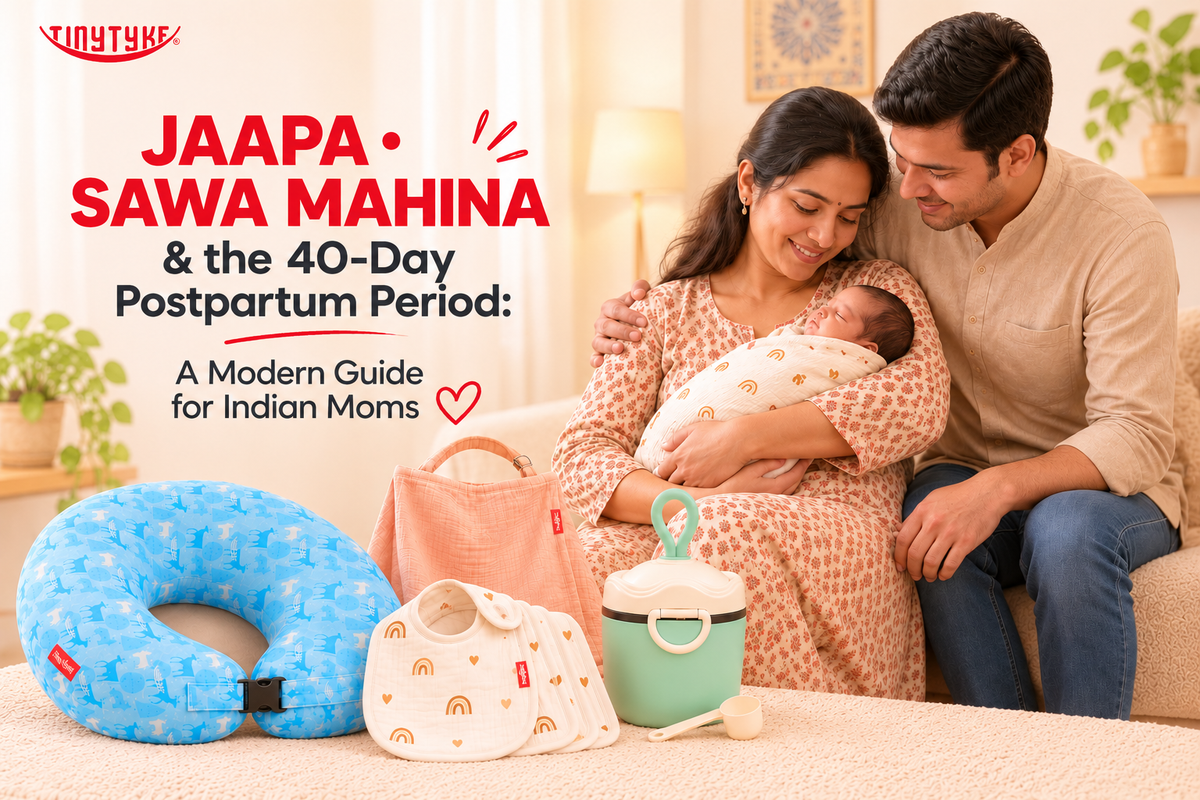
- A feeding pillow raises the baby to breast height, so you don't hunch. It also keeps baby's weight off C-section stitches.
- A muslin nursing cover gives privacy when relatives visit.
- Keep muslin napkins handy for burping and spit-ups.
- If feeding hurts a lot or baby isn't gaining weight, ask your doctor or a lactation consultant for help early.
The Newborn Feeding Time Comfort Kit brings these together, and you can browse more in breastfeeding & nursing and maternity essentials.
Getting More Rest With a Newborn
Rest is the heart of jaapa, but newborns wake every 2–3 hours. A few things make the nights easier:
- Take turns — let a family member settle the baby after feeds while you sleep.
- Keep night feeds dim and quiet so baby goes back to sleep faster.
- A safe, separate sleep space next to your bed means less lifting and bending.
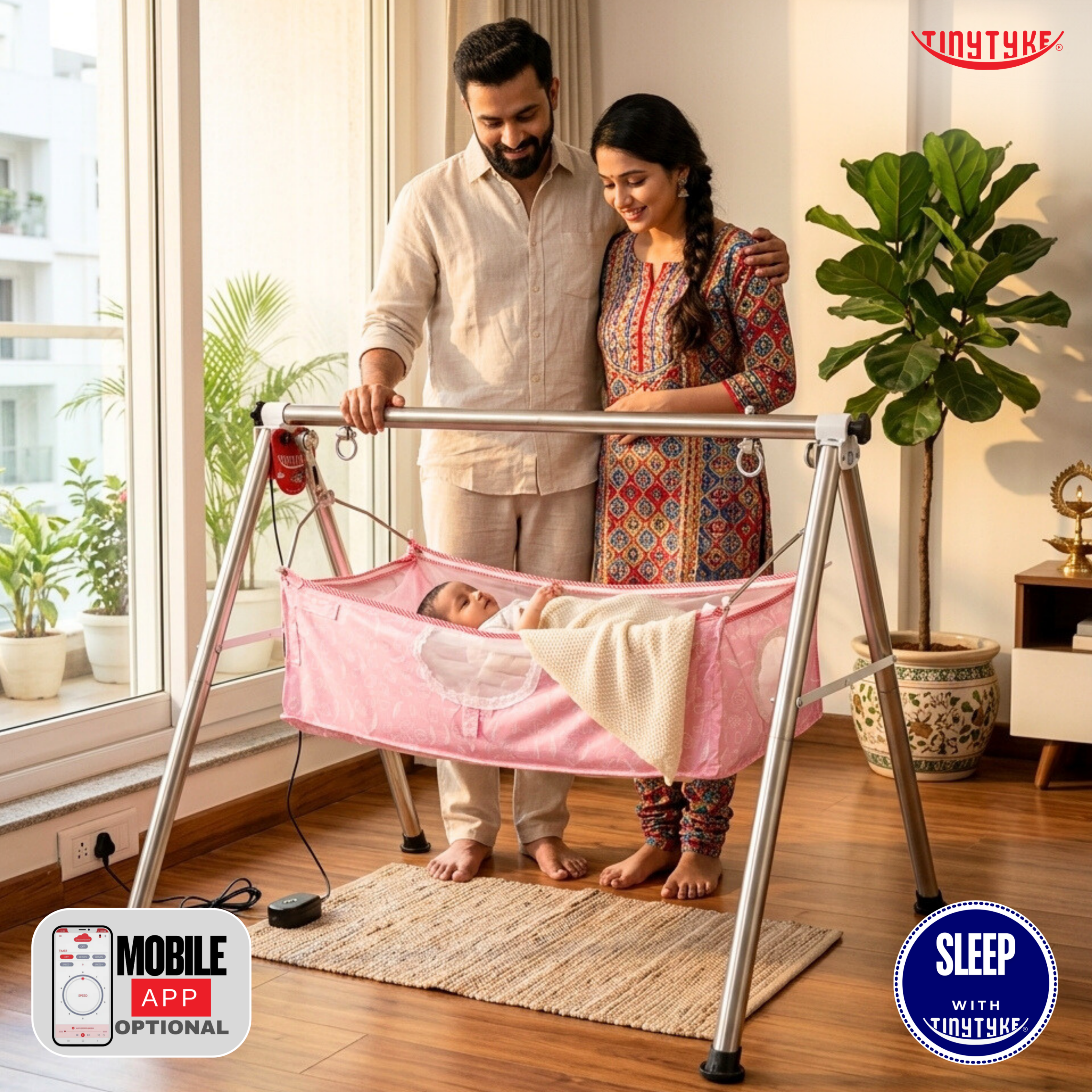
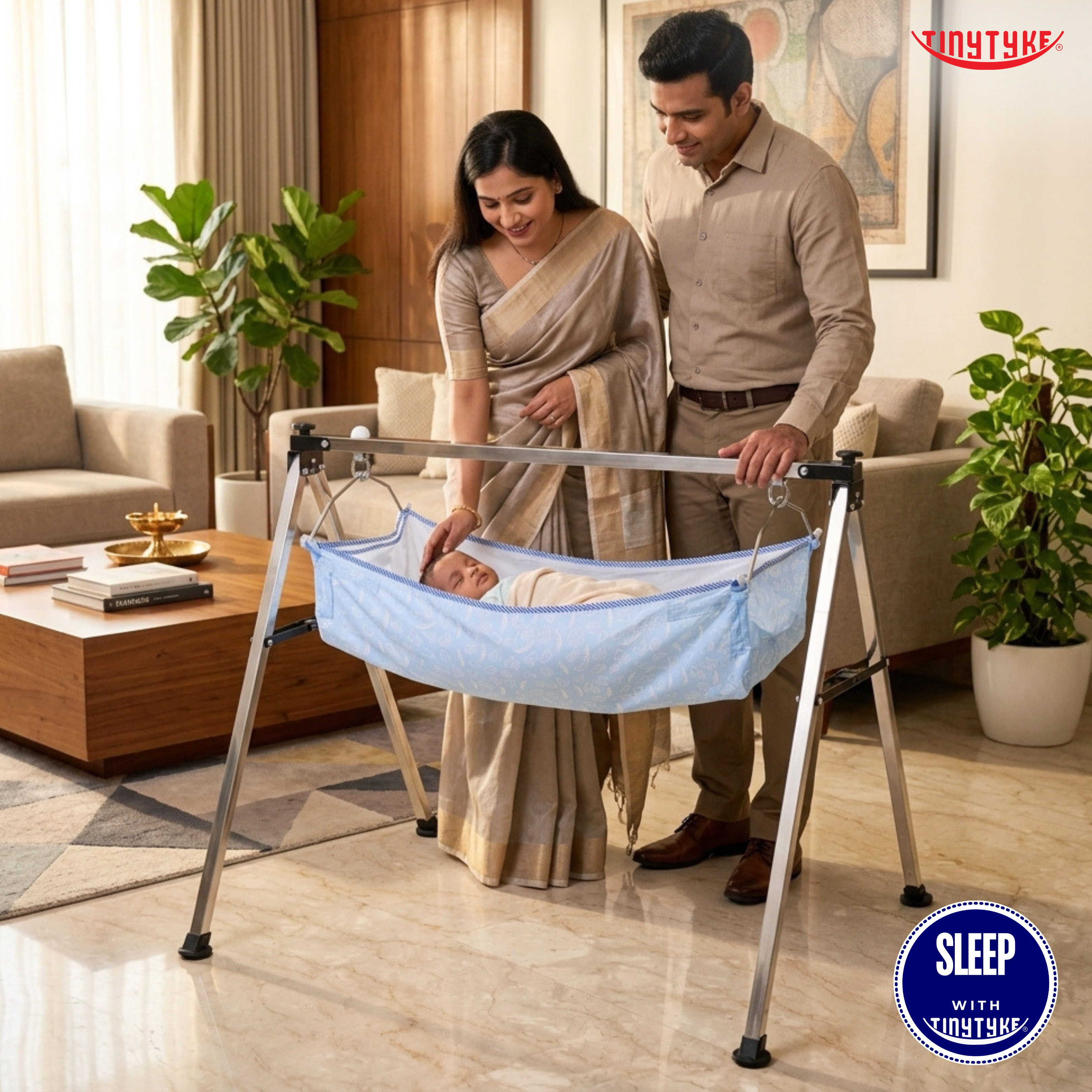
- Many Indian families use a palna or cradle for this. An automatic cradle gently rocks the baby so the mother doesn't have to, and a cradle automation kit can convert a family palna.
Read more about creating a safe sleep environment for your baby.
Your Mental Health Matters Too
Many new mothers feel weepy, anxious or overwhelmed in the first two weeks. This is often called the “baby blues” and usually fades on its own with rest and support.
But if sadness, anxiety, hopelessness or trouble bonding with the baby lasts longer than two weeks, gets worse, or you have frightening thoughts, please speak to your doctor. Postpartum depression and anxiety are common, treatable and nothing to be ashamed of. Families can help by listening without judgement and encouraging the mother to get support.
Warning Signs: Call Your Doctor
Contact your doctor straight away if you notice:
- Very heavy bleeding (soaking a pad in an hour) or large clots
- Fever, chills or foul-smelling discharge
- Redness, swelling, pain or discharge from stitches or a C-section wound
- A severe headache, blurred vision or swelling of the face and hands
- Pain, redness or swelling in one leg
- Chest pain or difficulty breathing
- A hard, red, painful area on the breast with fever
How Families Can Help During Jaapa
- Take over cooking, cleaning and laundry
- Bring water and snacks during feeds
- Handle burping, diaper changes and settling so mom can sleep
- Manage visitors kindly but firmly
- Offer encouragement, not criticism — every mother is learning
Getting ready for the arrival? See our pregnancy & newborn preparation checklist and shop newborn (0–3 months) essentials.
Frequently Asked Questions
What is jaapa after delivery?
Jaapa is the traditional Indian postpartum confinement period, usually about 40 days, when the new mother rests at home, eats nourishing food, gets massages and focuses on recovery and feeding while family handles the household.
Why is the postpartum period 40 days in India?
It roughly matches the six weeks the body needs to heal after childbirth, including the uterus returning to its normal size. Many cultures around the world observe a similar 40-day rest period.
Can I take a bath during jaapa?
Yes. Daily warm baths or sponge baths are important for hygiene and help prevent infections, especially around stitches. Follow your doctor's advice after a C-section.
What should a new mother eat after delivery in India?
Simple, nourishing home food: dal, khichdi, rotis, cooked vegetables, fruit, curd, nuts, and traditional foods like methi or ajwain in moderation. Drink plenty of fluids, and check with your doctor if you have diabetes or other conditions.
Is it normal to feel sad after delivery?
Feeling weepy or anxious in the first two weeks is common and is called the baby blues. If these feelings last longer than two weeks or get worse, speak to your doctor, as it may be postpartum depression, which is treatable.
This article is general information and not a substitute for medical advice. Always follow your doctor's guidance for your recovery.