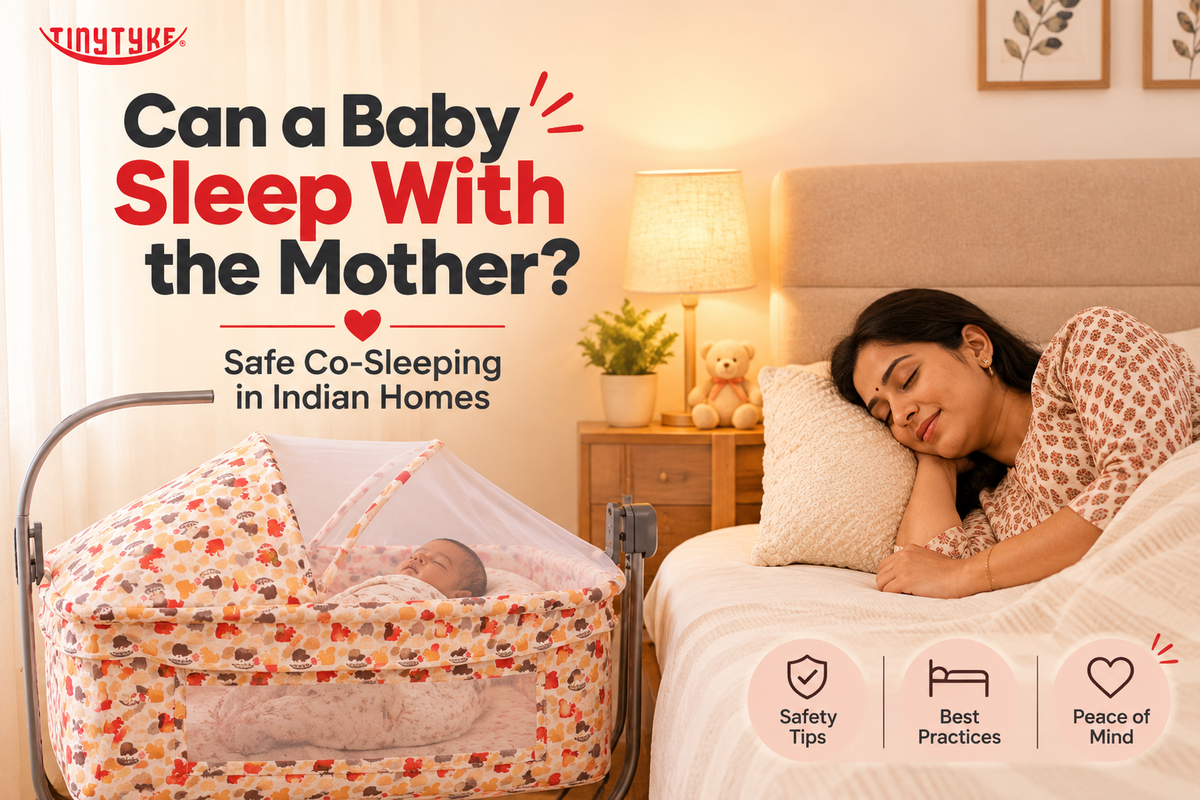
In most Indian homes, it's simply how things are done: the baby sleeps right beside Mummy on the big bed, sometimes with Papa on the other side and Dadi close by. Feeding at night is easy, the baby feels close, and everyone can keep an eye on the little one.
But many new parents also hear doctors say “don't sleep with the baby in your bed.” So what's right? This guide explains, in simple terms, what experts recommend, why, and how to keep your baby as safe as possible while staying close.
Co-Sleeping, Room-Sharing and Bed-Sharing: What's the Difference?
- Room-sharing: baby sleeps in the same room as the parents, but on their own separate sleep surface — a cot, bassinet or cradle next to the bed.
- Bed-sharing: baby sleeps on the same bed (or mattress, or floor gadda) as an adult.
- Co-sleeping is an umbrella word people use for both — which is why advice can sound confusing.
What Do Experts Recommend?
Leading paediatric bodies, including the American Academy of Pediatrics, recommend room-sharing without bed-sharing, ideally for at least the first 6 months. That means:
- Baby sleeps in your room, close enough to see, hear and feed easily
- Baby sleeps on their own firm, flat surface, not in the adult bed
- Baby is always placed on their back to sleep
Room-sharing is linked to a lower risk of SIDS (Sudden Infant Death Syndrome) and other sleep-related accidents. Bed-sharing, on the other hand, raises the risk of a baby getting trapped, covered by bedding, overheated, or rolled on — especially in the first 4 months.
So the short answer is: yes, your baby should sleep close to you — just not in the same bed.
When Bed-Sharing Is Most Dangerous
Some situations make bed-sharing much riskier. Never sleep in the same bed as your baby if:
- Your baby is under 4 months, was born premature or had a low birth weight
- Anyone in the bed smokes (even if not in the bedroom), or the mother smoked during pregnancy
- Anyone in the bed has had alcohol, or medicines or substances that cause drowsiness
- You are extremely tired — for example, after a long night or a difficult delivery
- The mattress is soft, saggy or uneven, or it's a waterbed
- There are pillows, heavy razais, quilts or bolsters near the baby
- Other children or pets are also in the bed
- The baby is placed between two adults, or near a gap between the bed and the wall
Most important of all: never fall asleep with your baby on a sofa, diwan or armchair. This is far more dangerous than a bed, because babies can slip into gaps or get wedged against cushions.
Why So Many Indian Families Bed-Share
Bed-sharing in India is about love, culture and practicality:
- Night feeds feel easier when the baby is right beside you
- Smaller homes and shared rooms mean less space for a separate cot
- Grandparents often feel the baby is safer and warmer close to the mother
- In cold weather, families worry the baby will feel cold alone
These are real reasons, and closeness is good for babies. The goal isn't to push your baby away — it's to keep the closeness while removing the biggest risks.
The Safest Setup: Baby Close, But on Their Own Surface
A separate sleep space right beside your bed gives you almost all the benefits of bed-sharing — easy feeding, closeness, easy checking — with far fewer risks.
- Place the baby's cot, bassinet or cradle within arm's reach of the mother's side of the bed.
- Use a firm, flat, well-fitting mattress with a fitted sheet. A waterproof dry sheet under the baby keeps the surface clean and dry.
- Keep the sleep space clear: no pillows, bolsters (side takiyas), soft toys, loose blankets or bumpers.
- Use a wearable sleeping bag instead of a loose blanket, like a muslin sleeping bag. In winter, add layers to the baby's clothes rather than heavy quilts.
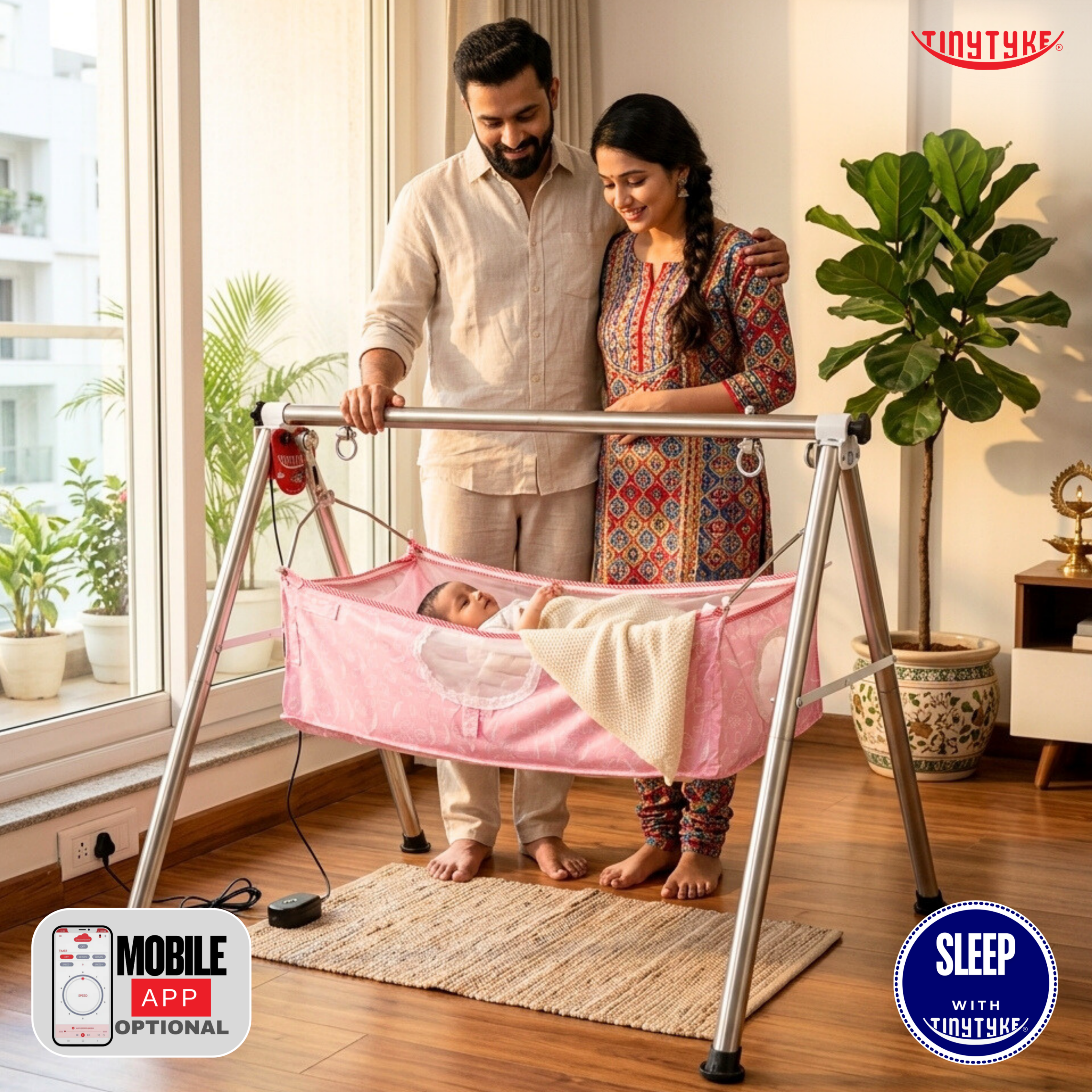
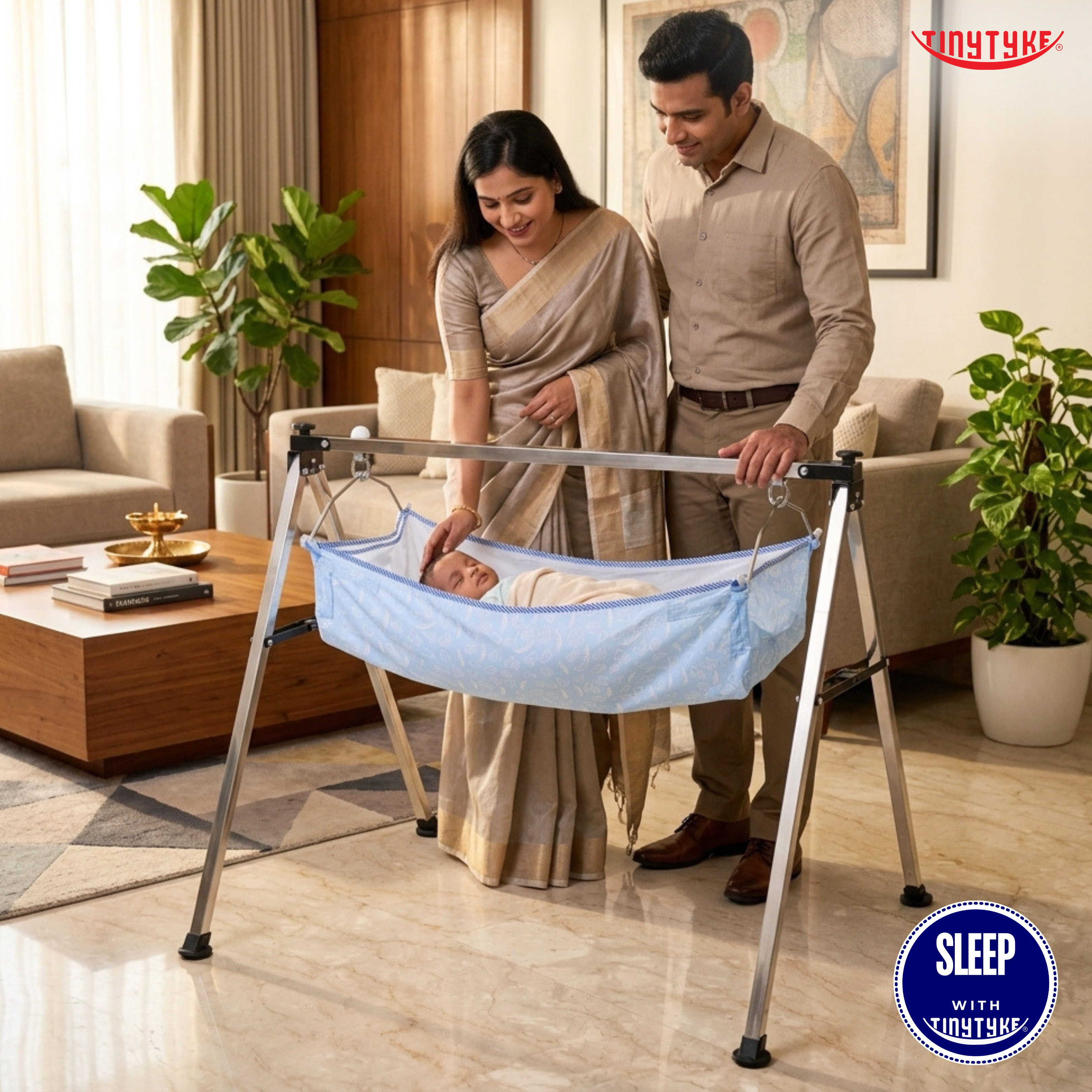
- Many Indian families use a palna or cradle next to the bed. If you use one, follow the product's safety instructions, make sure the base is firm and flat, and read our guide: are baby cradle swings safe for overnight sleep? Browse our baby cradles.
For a full checklist, see creating a safe sleep environment for your baby.
If You Do Bed-Share: How to Reduce the Risks
Some families will still choose to bed-share, or the mother may fall asleep while feeding. If that happens, it is safer to be prepared than to fall asleep by accident on a sofa. Health services such as the UK's NHS suggest these steps to lower the risk:
- Baby on their back, on a firm, flat mattress — never on a pillow.
- Keep pillows and heavy razais away from the baby. Use light bedding pulled no higher than your waist.
- Baby sleeps on the mother's side, not between two adults and not next to another child or a pet.
- Move the bed away from the wall, or make sure there are no gaps where the baby could slip.
- Don't swaddle the baby when bed-sharing, and don't overdress them — your body heat already keeps them warm.
- No smoking, alcohol or sedating medicine for anyone in the bed.
- Floor sleeping: if you sleep on a gadda on the floor, make sure it's firm and keep the area around the baby clear.
If you feel very sleepy during a night feed, put the baby back in their own sleep space before you drift off. A feeding pillow can make it easier to feed sitting up comfortably — but remove it from the bed before you sleep.
Talking to Grandparents About Safe Sleep
It can be hard when elders say, “We all slept with our mothers and we were fine.” A few gentle ways to explain:
- “The baby will still be right next to me, just on her own bed.”
- “Our doctor asked us to do it this way for the first few months.”
- “Mattresses and bedding today are much softer, so it's safer this way.”
- Ask them to help with night-time settling, so the mother can rest more.
Safe Sleep Checklist (Room-Share or Bed-Share)
- ✅ Baby always on their back to sleep
- ✅ Firm, flat surface
- ✅ No pillows, bolsters, soft toys or heavy quilts near the baby
- ✅ Baby's head and face uncovered
- ✅ Not too hot — check the back of the neck
- ✅ Smoke-free home
- ✅ Never sleep with baby on a sofa, diwan or armchair
For winter nights, read our guide to keeping a newborn warm without overheating. For new moms still recovering, our jaapa and 40-day postpartum guide has more tips on getting rest.
Frequently Asked Questions
Can a newborn sleep with the mother in the same bed?
Experts recommend that babies sleep in the same room as the mother, but on their own firm, flat surface such as a cot or bassinet next to the bed, especially for the first 6 months. Bed-sharing carries higher risks, particularly for babies under 4 months.
Is room-sharing safer than bed-sharing?
Yes. Room-sharing without bed-sharing is linked to a lower risk of SIDS and sleep-related accidents, while still keeping the baby close for feeding and comfort.
At what age is it safe to co-sleep with a baby?
Paediatric guidelines recommend room-sharing without bed-sharing for at least the first 6 months. The risks of bed-sharing are highest in the first 4 months and for babies born premature or with low birth weight.
Is it safe to fall asleep while breastfeeding in bed?
It is safer than falling asleep on a sofa or armchair. If you might fall asleep, remove pillows and heavy bedding from around the baby, keep the baby on their back on a firm surface, and move them to their own sleep space when you wake.
Can my baby sleep with a pillow?
No. Babies under 12 months should sleep on a firm, flat surface without pillows, bolsters, soft toys or loose bedding.
This article is general information and not medical advice. Please talk to your paediatrician about the safest sleep arrangement for your baby.