Updated October 2026 · By the TinyTyke team
In a world of flashing, beeping plastic toys, more and more parents are choosing simple wooden toys for their babies and toddlers. This guide explains why wooden toys are making a comeback, how to choose good-quality, safe wooden toys, and which types suit each age.
Quick Answer
Parents choose natural wooden baby toys because they're durable, simple, eco-friendly and encourage open-ended, imaginative play. When buying, check for smooth, splinter-free edges, child-safe non-toxic finishes, a size too big to be a choking hazard, secure parts and the right age range. Always supervise young children during play.
Why Parents Are Choosing Wooden Toys
1. Simple, calm play
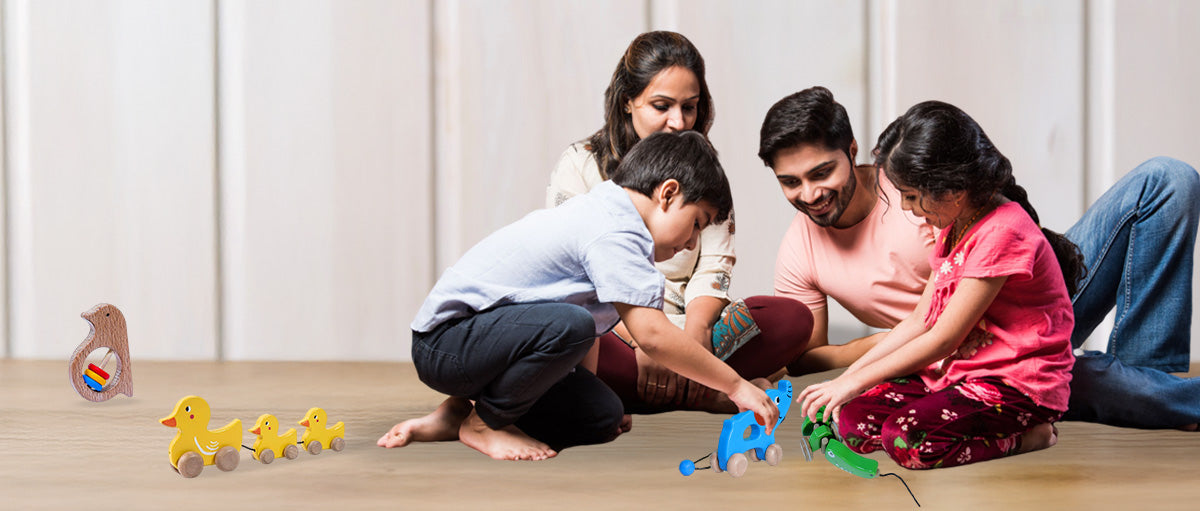
Wooden toys don't flash or make noise on their own, so children lead the play. A pull-along toy can be a pet, a train or a friend on an adventure.
2. Built to last
Well-made wooden toys survive being dropped, pulled and chewed, and can be passed down to siblings and cousins.
3. Natural materials
Good wooden toys are made from solid wood with child-safe finishes, a natural alternative to lots of plastic.
4. Eco-friendly
Wood is a renewable material, and long-lasting toys mean fewer things thrown away.
5. Supports development
- Motor skills: grasping, pulling and pushing
- Walking confidence: pull-along toys encourage toddlers to keep moving
- Imagination: open-ended toys invite pretend play
- Senses: the weight, texture and grain of wood are interesting to explore
Wooden Toys by Age
| Age | Good wooden toy types | Why |
|---|---|---|
| 0–6 months | Wooden teethers, simple rattles | Grasping and soothing sore gums (always supervised) |
| 6–12 months | Stacking toys, blocks, rattles | Hand-eye coordination, cause and effect |
| 1–3 years | Pull-along animals, shape sorters, puzzles | Walking, problem-solving, pretend play |
| 3+ years | Building sets, role-play toys | Creativity and imagination |
How to Choose Quality Wooden Baby Toys
- Smooth finish: run your hand over it. There should be no rough edges or splinters.
- Child-safe finish: look for non-toxic paints or natural finishes, as babies put everything in their mouths.
- Right size: the toy and its parts should be too big to fit in a baby's mouth.
- Secure parts: wheels, strings and pieces should be firmly attached.
- Short strings: pull-along strings should be short and only used with supervision.
- Age label: follow the recommended age.
- Solid wood: it feels heavier and lasts longer.
Caring for Wooden Toys
- Wipe with a damp cloth and mild soap; don't soak them in water.
- Dry them straight away and fully.
- Check regularly for cracks or splinters, and stop using any damaged toy.
TinyTyke Wooden Toys
- Wooden TinyBear Teether
- Wooden pull-along toys for 1–3 years: Duck, Horse, Elephant, Crocodile and Rabbit
See the full wooden toys collection.
Frequently Asked Questions
Are wooden toys safe for babies?
Yes, when they're well made with smooth edges, child-safe finishes, secure parts and a size that isn't a choking hazard. Always supervise play.
Are wooden toys better than plastic toys?
They're often more durable, simpler and more eco-friendly, and encourage open-ended play. A mix of good-quality toys is fine.
What age are pull-along toys for?
Usually 1–3 years, once your child is starting to walk. TinyTyke pull-along toys are for 1–3 years.
How do I clean wooden toys?
Wipe with a damp cloth and mild soap, then dry straight away. Don't soak them.
Can my baby chew on wooden toys?
Wooden teethers are made for chewing. For other toys, check that the finish is child-safe and supervise your baby.
Final Thoughts
Wooden toys bring simple, meaningful play into your child's day, and they last. Explore TinyTyke's wooden toys and soft toys.