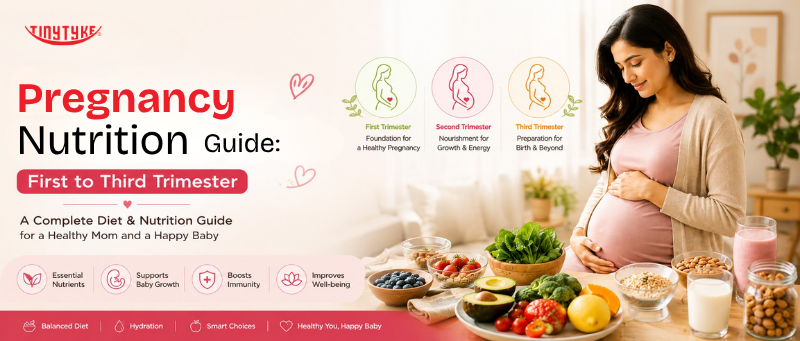
A healthy pregnancy diet contains critical nutrients such as folic acid, iron, calcium, protein, vitamin D, and omega-3 fatty acids, which help your baby's development and your health. Eating balanced meals during the three trimesters will help you avoid difficulties, promote healthy growth, and prepare your body for birthing and postpartum recovery.
| Quick Facts | |
|---|---|
| Best Diet | Balanced diet rich in protein, whole grains, fruits and vegetables |
| Important Nutrients | Folic Acid, Iron, Calcium, Vitamin D, Protein, DHA |
| Water Intake | 2.3–3 litres/day (unless otherwise advised) |
| Meals | 3 main meals + 2–3 healthy snacks |
| Avoid | Alcohol, raw meat, unpasteurized dairy, high-mercury fish |
| Medical Advice |
Always consult your obstetrician before major dietary changes or supplements |
Complete Pregnancy Nutrition Guide (First to Third Trimester)
Pregnancy is one of the most wonderful stages of life. Every meal you consume delivers nutrients for your growing baby while also benefiting your health. Good nutrition during pregnancy isn't about "eating for two"; it's about eating twice as well.
When you get pregnant, your body begins to work harder to nourish your baby. A well-balanced diet can help lower the risk of problems, promote good fetal development, keep you energized, and aid in postpartum recovery.
Whether you're in your first trimester or preparing for birth, this guide will explain what your body requires, which foods to prioritize, and how to develop healthy eating habits throughout your pregnancy.
Why Nutrition Matters During Pregnancy
Every stage of pregnancy causes rapid physical changes. Your baby's brain, bones, heart, lungs, and immune system are all dependent on the nutrients you ingest.
A good pregnant diet benefits:
1.Promote healthy fetal growth and development.
2.Adequate folic acid intake can reduce the risk of neural tube abnormalities.
3.Reduce the risk of iron deficient anemia.
4.Promote a healthy birthweight.
5.Calcium and vitamin D help to promote bone and tooth formation.
6.Maintain the maternal energy levels.
7.Boost the immunological system.
8.Aid in the recuperation process following childbirth.
According to the World Health Organization (WHO) and many national obstetric guidelines, one of the most effective methods to maintain a healthy pregnancy is to eat a balanced diet and take approved prenatal supplements.
Pregnancy Nutrition by Trimester
| Trimester | Baby's Development | Nutrition Focus |
|---|---|---|
| First Trimester (Weeks 1–12) | Brain, spinal cord, organs begin forming | Folic acid, vitamin B6, hydration, protein |
| Second Trimester (Weeks 13–27) | Rapid growth, bones strengthen | Calcium, iron, protein, omega-3 |
| Third Trimester (Weeks 28–Birth) | Brain growth, fat storage, lung development | Protein, iron, DHA, fiber, hydration |
First Trimester Nutrition Guide (Weeks 1–12)
The first trimester is essential because your baby's key organs begin to grow, frequently before the pregnancy becomes visible. During this time, many women suffer from nausea, exhaustion, food aversions, and morning sickness, making it difficult to eat regularly.
Instead of focusing on quantity, choose nutrient-dense foods that deliver the most nutrients even in little servings.
Essential Nutrients in the First Trimester
1. Folic Acid
Folic acid promotes the early development of your baby's brain and spinal cord and dramatically lowers the risk of neural tube abnormalities.
Food sources:
Spinach Broccoli Lentils
Chickpeas
Fortified cereals
Oranges
2. Protein
Protein provides the foundation for new tissues and aids in the development of your baby's organs, muscles, and placenta.
Food sources:
Eggs Paneer Milk
Greek yogurt Lentils
Soy products
Chicken and fish (low-mercury variations)
Aim to include protein in every meal.
3. Iron
Iron aids in the increased creation of blood required during pregnancy and helps to prevent anemia.
Iron-rich foods
Spinach
Beetroot Dates
Lean meat.
Beans
Rajma Black chana
To increase absorption, pair iron-rich foods with vitamin C sources such as oranges, guava, or tomatoes.
4. Vitamin B-6
Vitamin B6 may alleviate nausea and boost your baby's developing nerve system.
Good sources include:
Bananas and potatoes
Whole grains Nuts
Chicken
5. Hydration.
Morning sickness and vomiting might raise the risk of dehydration.
Aim to:
Drink water frequently throughout the day.
Drink coconut water if tolerated.
Include soups and fresh fruits with a high water content.
Limit your sugary beverages.
First Trimester Meal Plan
| Meal | Example |
|---|---|
| Breakfast | Vegetable oats + boiled egg + milk |
| Mid-Morning | Apple + handful of almonds |
| Lunch | Brown rice + dal + spinach sabzi + curd |
| Evening Snack | Roasted chana + coconut water |
| Dinner | Chapati + paneer curry + mixed vegetables |
| Before Bed | Warm milk |
Common First Trimester Challenges
Morning Sickness
Try to eat:
Small, frequent meals.
Before getting out of bed, try plain crackers and ginger tea (with doctor's approval).
Dry toast Bananas
Avoid extended intervals between meals.
Food aversions
If certain meals cause nausea:
-Experiment with different cooking methods.
-Consume cold fruits.
-Choose bland foods momentarily.
-Stay hydrated.
Fatigue
Fatigue is very prevalent.
Maintain your energy levels by:
Eating balanced meals.
This includes iron-rich meals.
Staying hydrated.
Getting enough sleep.
TinyTyke Tip
A Proper nutrition throughout pregnancy builds the groundwork for your baby's development, but proper sleep is equally crucial once your baby arrives.
As you prepare for parenting, it's important to understand about safe newborn sleep practices and how to create a peaceful sleep environment early on. TinyTyke baby cradles are intended to provide safe, gentle rocking as part of a consistent sleep routine following delivery. While diet promotes healthy growth before to birth, developing appropriate sleep habits can help both babies and parents adjust to life as a newborn.
Download Your Pregnancy Diet Chart - Click Here!