Motherhood can bring some of the happiest moments of your life. But alongside the cuddles, first smiles and little milestones, there can also be a quiet thought that follows you around:
“Am I doing enough for my baby?”
Maybe you feel guilty when you return to work. Maybe you wish you had more patience after a tiring day. Perhaps you compare yourself with another mother on Instagram or feel overwhelmed by advice from relatives.
If these thoughts sound familiar, you are not alone.
This feeling is commonly known as mom guilt. It can affect new mothers, working mothers, stay-at-home mothers and mothers who have plenty of family support. It doesn't automatically mean you are doing something wrong. Sometimes, it means you are trying to meet too many expectations at once.
In this guide, we'll explore what mom guilt means, why it can feel particularly complicated in Indian families, and practical ways to handle it without expecting yourself to be a perfect mother.
What Is Mom Guilt?
Mom guilt is the feeling that you are not doing enough, making the right decisions or meeting your own or other people's expectations as a mother.
It might sound like:
-
“I should spend more time with my baby.”
-
“I'm a bad mom because I got frustrated today.”
-
“Other mothers seem to manage everything better than me.”
-
“I feel guilty asking someone else to look after my baby.”
-
“I need some time for myself, but shouldn't my baby come first?”
These thoughts can arise around everyday parenting decisions, including feeding, sleep, screen time, returning to work, asking for help or taking a break.
Occasional guilt is a common human emotion. However, feeling guilty doesn't necessarily mean you have done something wrong. It can be useful to look at what happened, whether something needs to change and whether your expectations of yourself are realistic.
For further reading, explore the Cleveland Clinic's guide to understanding and navigating mom guilt.
Why Do Indian Moms Experience Mom Guilt?
Every family is different, but some experiences may feel especially familiar to Indian mothers.
1. Pressure to Be a “Perfect Mom”
Many mothers feel pressure to keep the house organised, prepare healthy meals, care for their babies, maintain relationships and still find time for themselves.
When real life doesn't match this ideal, guilt can creep in.
Remember: a baby's needs, household responsibilities and your own needs cannot always be managed perfectly every day. You are allowed to prioritise what matters most in the moment.
2. Advice From Family and Relatives
In many Indian families, grandparents, relatives and other experienced caregivers are closely involved in raising a child. Their support can be valuable, but conflicting advice can sometimes make a new mother question her choices.
You may hear different opinions about feeding, sleep routines, clothing, holding the baby or when to introduce certain activities.
Instead of feeling that you must satisfy everyone, try to agree on a few consistent, evidence-informed caregiving practices with your partner and healthcare professional.
You can appreciate someone's experience while still making informed decisions for your own child.
3. Working-Mom Guilt
Returning to work can bring a mixture of emotions. You might enjoy your career and still miss your baby during the day.
You may feel guilty when you leave for work, when you return home tired or when you cannot attend every little milestone.
Working and loving your baby are not opposites. Your family's routine can include childcare, help from trusted family members, time with your baby and time for your professional goals.
Instead of measuring motherhood by the number of hours you spend together, look for manageable opportunities to connect, such as a relaxed feeding session, a bedtime story or a few minutes of focused play.
4. Comparing Yourself With Other Mothers
Social media often shows carefully selected moments: coordinated outfits, beautifully organised nurseries, homemade meals and smiling family photographs.
But you rarely see the full picture behind those moments.
Comparing your everyday life with someone else's selected highlights can make ordinary parenting challenges feel like personal failures.
Try to follow accounts that make you feel supported rather than inadequate. You can also take a break from content that repeatedly makes you question your parenting.
5. Feeling Guilty About Needing Rest
A mother can love her baby deeply and still feel exhausted.
You may want a shower without interruptions, a quiet cup of chai, time with your partner or a few minutes to do absolutely nothing.
Those needs do not make you selfish. Caring for your own physical and emotional wellbeing matters, too.
UNICEF offers practical guidance on self-care for parents, including making time for your needs and asking for support.
9 Common Mom-Guilt Triggers—and What You Can Do
Trigger 1: “I Didn't Spend Enough Time With My Baby Today”
Try this: Choose one small moment of connection. Talk while changing your baby's clothes, sing during a routine or put your phone aside for a short play session.
You do not need to turn every moment into an educational activity. Ordinary, responsive interactions matter.
Trigger 2: “I Lost My Patience”
Try this: Acknowledge what happened without labelling yourself a bad mother.
When you are calm, reconnect with your child in an age-appropriate way. If you shouted, you can use a gentle voice and repair the interaction. Notice what contributed to your frustration, such as hunger, exhaustion or having too much to manage.
If you feel close to losing control, place your baby in a safe place, step away briefly if appropriate and ask a trusted adult for help.
Trigger 3: “I Feel Guilty About Returning to Work”
Try this: Create a realistic handover routine with your baby's caregiver. Share important information about feeding, naps, comfort and daily needs.
If possible, set aside a small window for reconnection after work. It does not need to be elaborate—a cuddle, conversation or familiar bedtime routine can be enough.
Trigger 4: “My Baby Isn't Following the Routine I Planned”
Try this: Treat routines as helpful guides, not tests you must pass.
Babies' needs change as they grow, and some days are unpredictable. If sleep or feeding concerns persist, discuss them with your paediatrician rather than assuming you have failed.
Trigger 5: “My House Is Messy”
Try this: Separate essential tasks from tasks that can wait.
A safe space for your baby, necessary feeding supplies and basic hygiene may matter more today than perfectly folded laundry or an immaculate living room.
Ask your partner or another trusted family member to take responsibility for specific tasks rather than waiting for someone to notice that you need help.
Trigger 6: “I Let My Baby Have Screen Time”
Try this: Focus on what you can do next rather than punishing yourself for one difficult day.
Consider your child's age and current screen-time guidance, and plan simple alternatives when practical, such as singing, reading a picture book or supervised floor play. If screens have become a frequent source of concern, make a realistic plan to adjust the routine.
Trigger 7: “Other Moms Are Doing More Than Me”
Try this: Remember that families have different resources, working hours, childcare arrangements and support systems.
Choose one goal that fits your own circumstances instead of copying another family's routine.
Trigger 8: “I Feel Guilty Asking for Help”
Try this: Ask for something specific.
For example: “Can you watch the baby for 20 minutes while I eat and freshen up?” is easier to act on than “I need more help.”
Accepting support does not take away your role as a mother. It helps make caregiving more sustainable.
Trigger 9: “I Want Time for Myself”
Try this: Start small and plan for it without apologising.
It might be a short walk, a phone call with a friend, a hobby or simply sitting quietly. Your own needs are part of family wellbeing, not a reward you must earn after finishing every task.
How to Deal With Mom Guilt: 7 Practical Steps
Here is a simple approach you can use whenever guilt starts to take over.
1. Name the Feeling
Instead of immediately believing the thought, pause and say to yourself:
“I'm feeling guilty right now. That doesn't automatically mean I've done something wrong.”
Naming the feeling gives you a chance to examine it instead of reacting to it.
2. Ask Yourself What the Guilt Is Telling You
Try asking:
-
Is there something specific I need to change?
-
Am I comparing myself with someone else?
-
Am I exhausted or overwhelmed?
-
Am I trying to meet an expectation that isn't realistic for my family?
If a genuine problem needs attention, take one manageable step. If the guilt comes from unrealistic expectations, practise letting that expectation go.
3. Replace Self-Criticism With a More Balanced Thought
Instead of: “I'm not a good mother because I couldn't do everything today.”
Try: “Today was difficult. I took care of important needs, and I can work on the things that need attention tomorrow.”
This isn't about pretending everything is perfect. It is about being fair to yourself.
4. Share Responsibilities
Talk with your partner or trusted family members about the work involved in caring for your baby.
Discuss who will handle particular tasks, when you can rest and what support you need. Clear responsibilities can reduce the pressure to remember, plan and manage everything alone.
5. Create Small, Realistic Routines
You do not need a complicated daily schedule.
A simple routine could include:
-
A few minutes of connection with your baby.
-
One manageable household priority.
-
A meal and water break for yourself.
-
A short rest when support is available.
-
A calming activity at the end of the day.
Adapt the routine to your baby's age and your family's circumstances.
6. Limit Unhelpful Comparisons and Advice
You can listen respectfully without following every suggestion.
When advice feels overwhelming, try saying: “Thank you for sharing. We'll discuss it with our paediatrician and decide what works for our baby.”
You can also mute social media accounts that repeatedly leave you feeling inadequate.
7. Notice What Went Well
At the end of the day, think of one thing you did that mattered.
Perhaps you comforted your baby, asked for help, took a break before becoming overwhelmed or simply got through a challenging day.
You don't need to create a perfect parenting record. This is a way to notice your efforts instead of focusing only on what you think you missed.
How TinyTyke Can Support Your Everyday Parenting Routine
Mom guilt cannot be solved by buying products, and no baby product can replace love, attention or responsive caregiving. However, practical essentials can help organise some everyday tasks and make routines easier to manage.
At TinyTyke, our baby-care and play products are designed to support different parts of family life.
Make Outings Easier With a Baby Stroller
Getting outside with your baby can be an enjoyable way to change your surroundings and spend time together.
A suitable stroller can help organise family walks and everyday outings. Choose one that matches your baby's age, size and needs, and always follow the manufacturer's safety instructions.
Explore the TinyTyke baby stroller collection.
For independent safety guidance, read the American Academy of Pediatrics' article on how to buy a safe stroller.
Encourage Simple Play With Age-Appropriate Toys
You don't need to plan elaborate activities every day. Depending on your baby's age and abilities, talking, singing, looking at picture books and playing with suitable toys can create opportunities for interaction.
Explore TinyTyke Play & Development products for ideas that fit your child's stage.
Choose toys that are age-appropriate, free of small detachable parts that could pose choking risks, and used with suitable supervision. The American Academy of Pediatrics shares further advice on what to look for in a toy.
Organise Your Baby-Care Essentials
Keeping everyday essentials organised may make packing for outings or preparing for a caregiver handover less stressful.
Explore TinyTyke baby essentials and the complete TinyTyke collection to find products suited to your family's needs.
Keep Sleep Safety Separate From Convenience
A predictable bedtime routine can help families prepare for sleep, but no product can guarantee that a baby will sleep well.
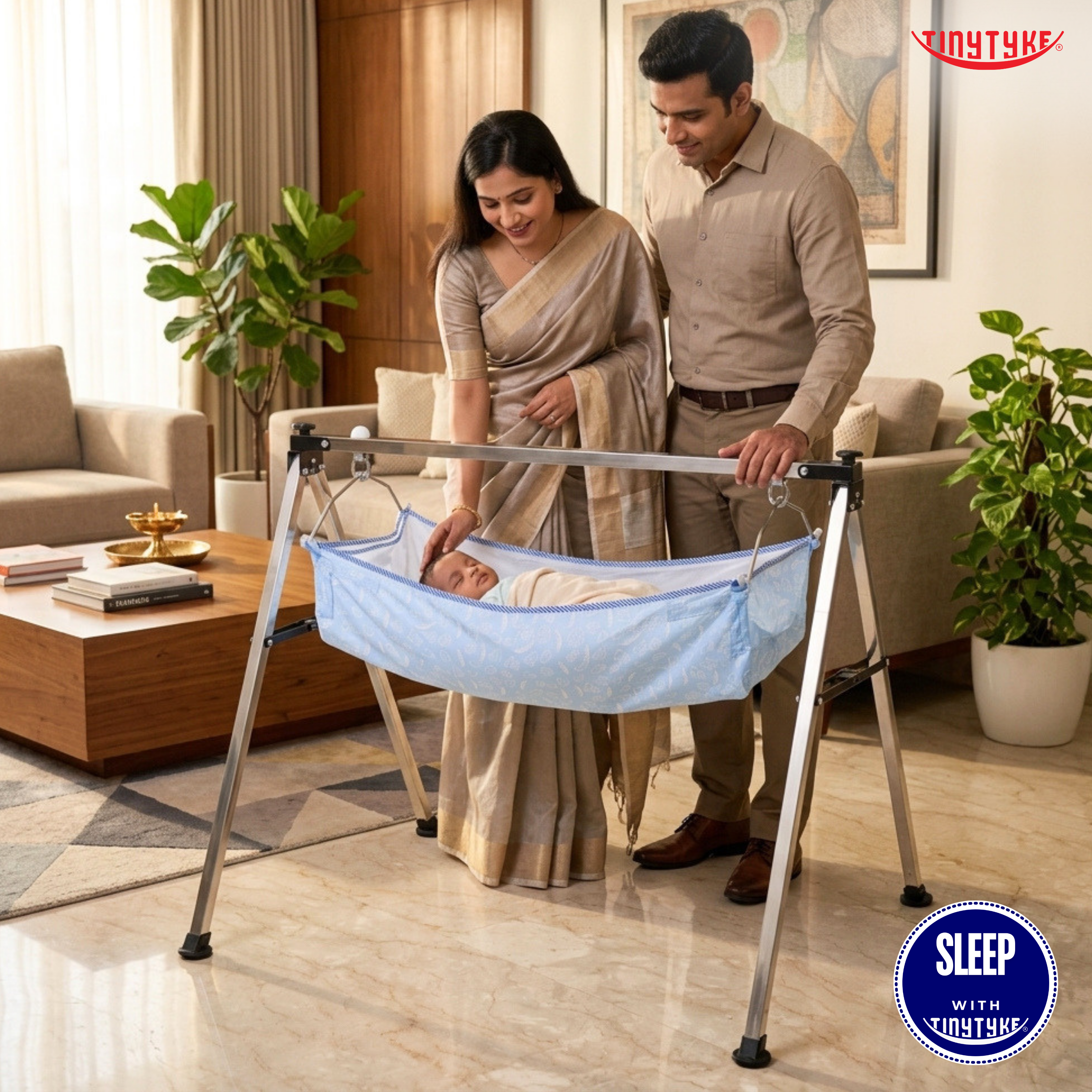
If you are considering a TinyTyke automatic baby cradle, read the specific product instructions carefully. Do not assume that rocking or automatic movement makes a cradle suitable for routine infant sleep. Follow current safe-sleep guidance and use an appropriate firm, flat sleep surface for your baby.
The aim is not to buy your way out of parenting stress. It is to choose useful products thoughtfully, where they genuinely suit your routine.
When Should Mom Guilt Be Taken More Seriously?
Occasional guilt and self-doubt are not the same as a mental health condition. However, you deserve support if these feelings become persistent, overwhelming or interfere with daily life.
Consider speaking with a qualified healthcare professional if you experience ongoing sadness, hopelessness, intense anxiety, feelings of worthlessness, loss of interest in things you usually enjoy, or difficulty functioning.
These symptoms can have different causes and should not be dismissed as simply part of motherhood. Mental health difficulties during pregnancy and after childbirth are treatable, and seeking help is not a sign of failure. The World Health Organization provides information about perinatal mental health.
If you have thoughts of harming yourself or your baby, seek urgent professional help and ask a trusted adult to stay with you and help keep you and your baby safe.
Frequently Asked Questions About Mom Guilt
1. What is mom guilt in simple words?
Mom guilt is the feeling that you are not doing enough or are making the wrong decisions as a mother. It can happen even when you are doing your best to care for your child.
2. Is mom guilt normal?
Many parents experience guilt or self-doubt at times. However, frequent or overwhelming guilt deserves attention, especially if it affects your wellbeing or daily life.
3. How can I stop feeling guilty as a working mom?
Start by setting realistic expectations, arranging reliable childcare, sharing responsibilities and creating small opportunities to connect with your baby. Remember that working does not mean you love your child any less.
4. How do I handle mom guilt when my family criticises my parenting?
Listen to advice you find useful, but remember that you do not have to follow every opinion. Discuss health and developmental questions with your paediatrician, and agree on consistent caregiving decisions with your partner or trusted caregivers.
5. Is it selfish to take time for myself after having a baby?
No. Rest, social connection and personal time are legitimate needs. When possible, plan breaks with support from your partner, family or another trusted caregiver.
6. When should I seek help for mom guilt?
Seek professional advice if guilt is persistent, intense or accompanied by symptoms such as ongoing sadness, hopelessness, anxiety, loss of interest or difficulty managing daily activities. You do not need to wait until things feel unbearable to ask for help.
A Gentle Reminder for Every Indian Mom
You do not have to be a perfect mother to be a loving one.
Some days, you may feel patient and organised. Other days, you may feel tired, frustrated or unsure. Motherhood is not a daily examination that you must pass.
You can love your baby and need rest. You can be grateful for your family and still feel overwhelmed. You can ask for help, change your mind and learn as you go.
Instead of asking yourself, “Did I do everything perfectly today?”, try asking:
“Did I do what I reasonably could today, and what support do I need tomorrow?”
Give yourself the same kindness you would offer another mother who is trying her best.
Let's talk: What triggers mom guilt the most for you—work, family expectations, screen time, lack of sleep or comparing yourself with other moms? Share your thoughts in the comments. Your experience may help another mother feel less alone.
This article is for general information and emotional support. It does not replace advice from a qualified healthcare or mental health professional.