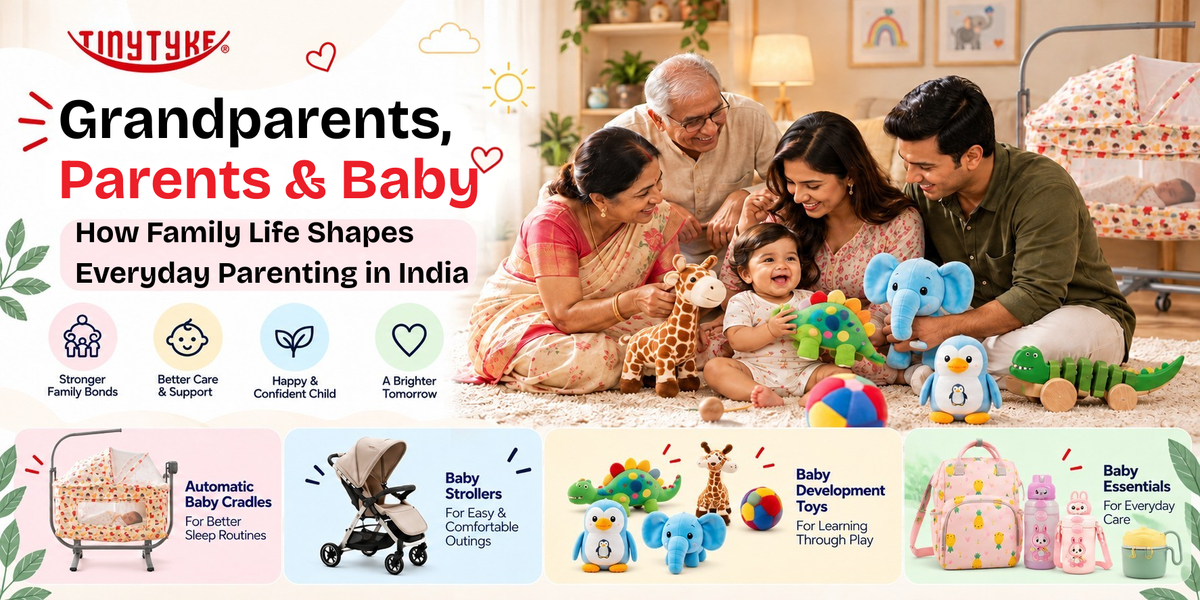
Family life in India is about more than raising a baby. It is about sharing traditions, learning from different generations, building new routines and discovering what works best for your family.
In many Indian homes, a baby's arrival brings everyone closer. Grandparents share age-old wisdom, parents navigate modern parenting advice, and the little one becomes the centre of countless conversations, celebrations and everyday moments.
From nani and dadi singing lullabies to parents researching baby products online, every generation brings something valuable to a child's early years.
But family life also brings questions. Should a baby follow a strict sleep routine? How much screen time is appropriate? Which toys are suitable for different ages? How can grandparents and parents follow the same baby-care routine? And what essentials can make daily parenting easier?
The answer is not to choose between traditional and modern parenting. It is to combine family experience, reliable information, loving care and practical solutions that fit your household.
In this guide, we explore how grandparents, parents and family routines shape everyday parenting in India—and how thoughtfully chosen products, including baby cradles, strollers, toys and daily essentials, can support family life.
Table of Contents
- The changing meaning of parenting in Indian families
- The special role of grandparents in a baby's life
- How parents balance tradition with modern parenting
- Joint family vs nuclear family: What changes in daily baby care?
- Building a consistent routine with multiple caregivers
- Baby sleep: Combining traditional comfort with safe sleep practices
- Baby play and development: Why everyday interaction matters
- Going out with a baby: Choosing practical travel essentials
- Baby products that can support everyday family life
- A practical baby-care checklist for Indian families
- How to create a happier parenting partnership
- Frequently asked questions
- Final thoughts
1. The Changing Meaning of Parenting in Indian Families
Parenting in India is changing, but the importance of family remains strong.
In some households, grandparents live with the parents and help care for the baby every day. In others, grandparents live in another city but visit regularly, help during the early months or stay connected through video calls.
Meanwhile, many parents are balancing work, household responsibilities, personal well-being and the needs of a growing child.
This means that parenting looks different from one family to another.
A typical day might include:
- A grandmother helping with the baby's morning routine.
- A parent preparing for work while organising feeding and changing essentials.
- A grandfather entertaining the baby with songs and stories.
- A parent researching age-appropriate toys or planning a family outing.
- Everyone working together to make the baby feel loved, comfortable and secure.
The most important part is not whether a family follows a traditional or modern lifestyle. It is whether the baby receives responsive care, appropriate nutrition, safety, affection and opportunities to learn through everyday experiences.
The World Health Organization's Nurturing Care Framework highlights the importance of good health, nutrition, safety, responsive caregiving and opportunities for early learning during childhood.
The takeaway: A baby's development is supported not by one perfect parenting method, but by consistent, caring interactions with the adults around them.
2. The Special Role of Grandparents in a Baby's Life
Grandparents often bring something unique to a child's upbringing: time, patience, stories, family traditions and the experience of caring for children across generations.
Their contribution can be especially meaningful when new parents are tired, adjusting to life with a newborn or returning to work.
Passing down family traditions
Traditional lullabies, familiar songs, regional languages, storytelling and family celebrations can become part of a baby's everyday world.
For example, grandparents might sing a Gujarati lullaby, tell a simple family story or introduce the baby to familiar words in their mother tongue.
These everyday interactions create opportunities for bonding and communication.
Offering practical support
Grandparents may help with tasks such as:
- Holding and comforting the baby while the parent prepares a meal.
- Talking, singing and playing with the baby.
- Helping organise baby clothes and changing essentials.
- Accompanying the family on short outings.
- Supporting parents during busy periods, when appropriate.
The most useful help is often practical and specific. Instead of assuming that a new parent needs advice, a grandparent can ask, "Would you like me to watch the baby while you eat or rest?"
Learning from one another
Grandparents may have raised children before, but recommendations about infant sleep, feeding, car-seat use and other safety practices can change over time.
Parents may also have access to newer guidance from paediatricians and public-health organisations.
Both generations can contribute: grandparents offer experience and emotional support, while parents can share current medical guidance and their baby's individual needs.
A helpful family rule: Respect the experience of older generations while making health and safety decisions using current, reliable guidance and advice from your child's healthcare professional.
3. How Parents Balance Tradition with Modern Parenting
Modern Indian parents often find themselves balancing advice from family members, doctors, parenting books, social media and personal experience.
One relative may recommend a traditional remedy. Another may suggest a particular feeding schedule. An online video may recommend a different sleep routine.
It can become confusing, especially for first-time parents.
A helpful approach is to separate family preferences from health and safety decisions.
Keep the traditions that bring connection
Family songs, stories, festivals, language, gentle play and shared meals when age-appropriate can create meaningful memories.
These traditions do not need to be complicated. Even ten minutes of singing with nani or reading a picture book with dada can become a familiar part of the day.
Check health-related advice carefully
For feeding, medicines, supplements, home remedies, sleep arrangements and concerns about development, check with a qualified healthcare professional.
Avoid giving a baby honey before 12 months. Do not use unprescribed medicines or remedies for an infant, and seek professional guidance if you are unsure about an ingredient or practice.
Use technology as a tool, not a replacement for care
Modern products can make certain routines more convenient. A stroller can help with family outings, an organiser can keep changing essentials together, and age-appropriate toys can provide opportunities for play.
However, no product replaces a caregiver's attention, affection or supervision.
The goal is to use modern tools where they genuinely help while preserving the human connection that makes family life special.
4. Joint Family vs Nuclear Family: What Changes in Daily Baby Care?
There is no single family structure that guarantees a better parenting experience. Both joint and nuclear families can provide loving, supportive environments.
The difference often lies in how responsibilities are shared and how everyday routines are organised.
Parenting in a joint family
In a joint family, several adults may be available to help with the baby.
Potential benefits include:
- More opportunities for bonding with grandparents and relatives.
- Shared household responsibilities.
- Extra support during busy workdays.
- More family interaction, stories and play.
Possible challenges include:
- Different opinions about feeding, sleep or discipline.
- Several caregivers following different routines.
- Difficulty maintaining consistent rules.
- Parents feeling that their decisions are being questioned.
A practical solution is to agree on a few important baby-care guidelines together. These can include feeding instructions, safe sleep arrangements, hygiene practices, emergency contacts and the baby's usual routine.
Parenting in a nuclear family
In a nuclear family, parents may have greater control over the baby's routine and household decisions.
Potential benefits include:
- More consistency in daily routines.
- Greater privacy and independence.
- Easier coordination between the primary caregivers.
- More flexibility to organise the home around the baby's needs.
Possible challenges include:
- Managing childcare and household tasks with fewer people.
- Balancing work and parenting responsibilities.
- Feeling tired or isolated without nearby family support.
- Planning every outing and appointment more independently.
- Parents can build a support system through trusted relatives, friends, parent groups and appropriate childcare arrangements.
Which family structure is better for a baby?
Neither structure is automatically better. A baby's experience depends on the quality of care, safety, emotional connection and consistency available in that environment.
A supportive joint family can offer shared care, while a supportive nuclear family can provide a predictable routine and close parent-child interaction. Many families also combine both approaches.
The important question is: Does the family work together to meet the baby's needs while respecting the parents' role as decision-makers?
5. Building a Consistent Routine with Multiple Caregivers
A baby may spend time with a mother, father, grandparents or another trusted caregiver throughout the day. A simple shared routine can help everyone coordinate care.
It does not need to be a rigid timetable. Babies' feeding, sleep and activity needs change with age, and flexibility is important.
Create a shared baby-care note
Keep essential information in one place, either in a notebook or a shared digital note.
Include:
- Feeding instructions and any relevant allergies.
- Nap and bedtime cues.
- Diaper-changing and hygiene preferences.
- Age-appropriate play activities.
- Medicines or care instructions prescribed by a doctor.
- Emergency contacts and important medical information.
Agree on the basics
Family members do not need to agree on every small detail. Focus on the decisions that matter most.
For example:
- Follow the same instructions for preparing and storing feeds.
- Use consistent hygiene practices.
- Follow the same safe sleep guidance.
- Choose toys appropriate for the baby's age and abilities.
- Inform one another about changes in the baby's behaviour or health.
Make handovers simple
When one caregiver takes over, a quick update can prevent confusion.
Try: "The baby fed at this time, had a nap, and has been a little fussy since waking."
This simple habit can make shared care smoother and help everyone feel involved.
6. Baby Sleep: Combining Traditional Comfort with Safe Sleep Practices
Sleep is one of the most discussed topics in Indian households.
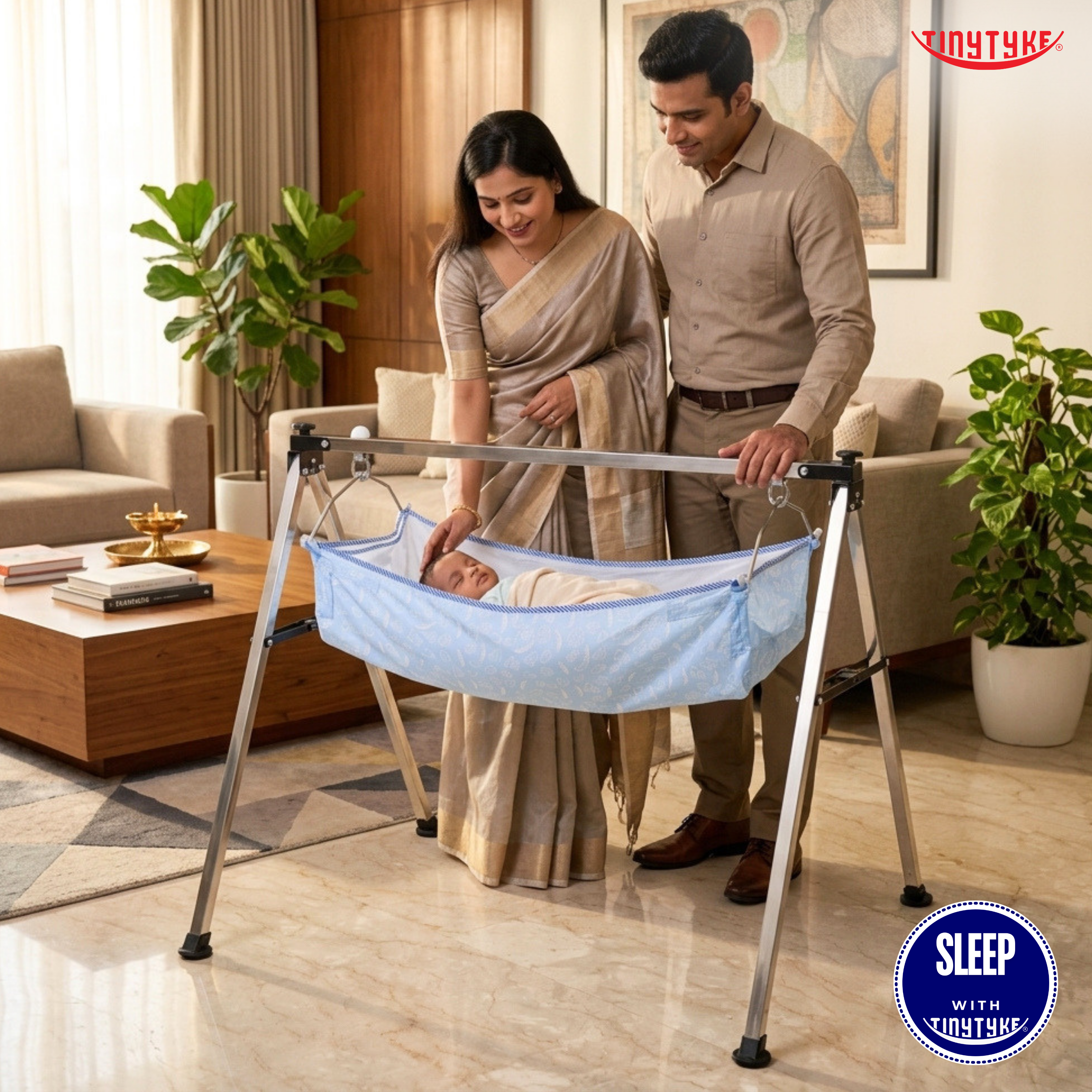
Grandparents may remember using a traditional ghodiyu or palna. Parents may be exploring sleep routines, soothing techniques or modern baby-care products.
It is understandable to want to help a baby settle. However, soothing and safe sleep are not the same thing.
Create a calm bedtime routine
A simple routine might include:
- Changing the baby's diaper and putting on comfortable sleepwear.
- Feeding according to the baby's needs.
- Keeping the environment calm and reducing stimulation.
- Singing a gentle lullaby or speaking softly.
- Following the safe sleep guidance appropriate for the baby's age.
A predictable routine may help signal that it is time to wind down, although babies will not always sleep according to a fixed schedule.
Where does an automatic baby cradle fit in?
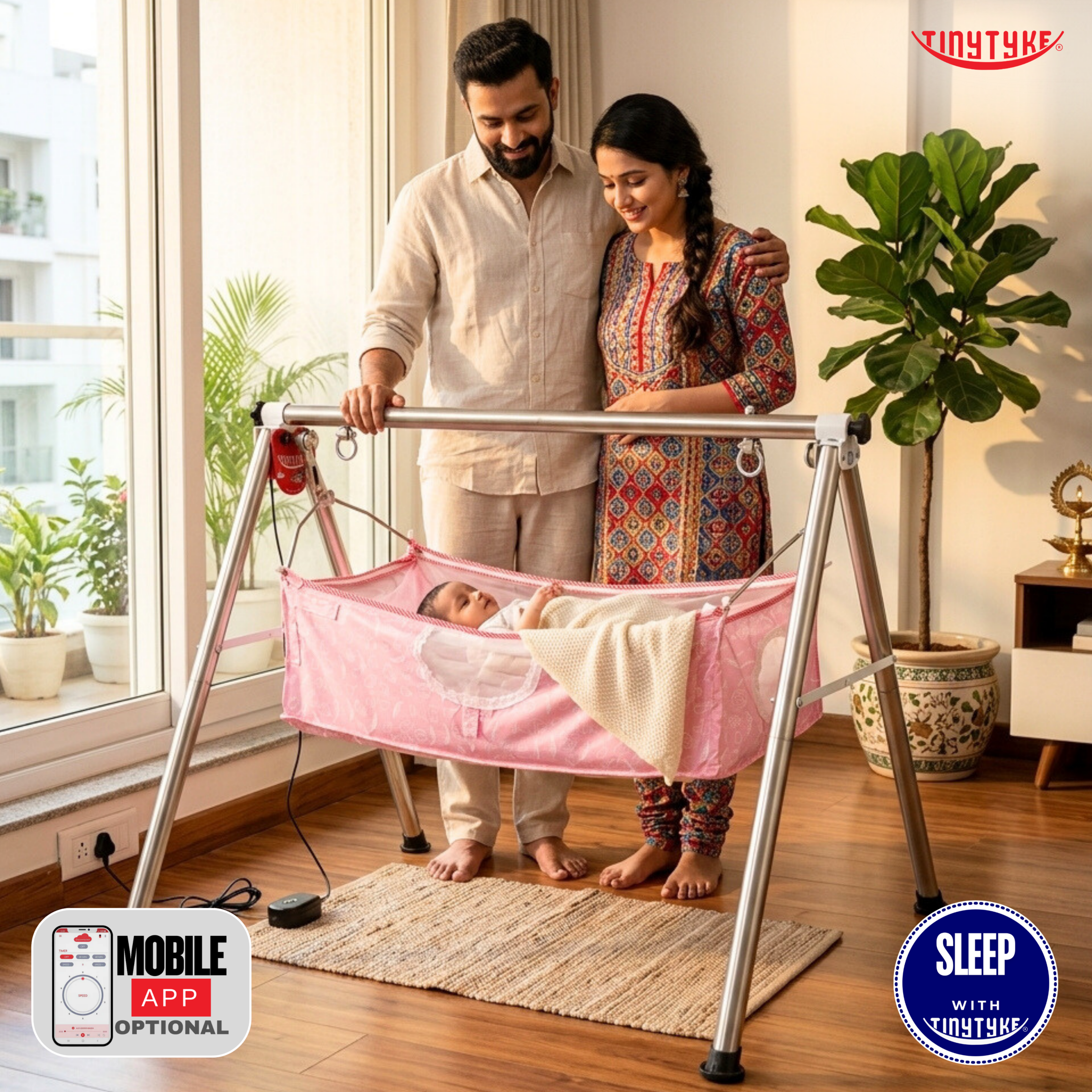
In many Indian homes, a cradle is a familiar part of baby care. An automatic baby cradle can provide a convenient rocking option for supervised soothing when used exactly as directed by the manufacturer.
For families exploring modern versions of the traditional ghodiyu, TinyTyke offers automatic baby cradles, including options with features such as adjustable rocking or app control on selected models.
An automatic cradle may fit into a family's soothing routine, but it should not be assumed to be a safe sleep surface simply because it rocks or is marketed for sleep.
Important safe sleep reminder: For routine infant sleep, follow current guidance from your paediatrician and recognised safe-sleep authorities. In general, babies should be placed on their backs on a firm, flat, non-inclined sleep surface designed for infant sleep, without loose bedding or soft objects. If a baby falls asleep in a sitting or inclined product, move them to an appropriate safe sleep surface as soon as it is practical to do so.
Read the American Academy of Pediatrics' safe sleep recommendations and the instructions for any product you use.
How can grandparents and parents agree on sleep?
Instead of debating whose method is better, discuss three things together:
- What helps the baby settle?
- Which methods are appropriate and safe for the baby's age?
- What should every caregiver do when the baby falls asleep?
A shared understanding helps preserve family traditions while keeping safety at the centre of everyday care.
7. Baby Play and Development: Why Everyday Interaction Matters
Babies do not need a room full of expensive toys to learn. They need opportunities to explore, move, listen, communicate and interact with caring adults.
Grandparents and parents can both make play meaningful.
Play ideas for different stages
For babies aged 0–6 months
- Talk and sing to your baby.
- Show simple, age-appropriate visual toys.
- Offer suitable rattles for supervised exploration when developmentally appropriate.
- Provide supervised tummy time while the baby is awake, following professional guidance.
For babies aged 6–12 months
- Offer safe toys that are easy to grasp.
- Read simple picture books together.
- Play peekaboo and other interactive games.
- Encourage reaching and exploring in a safe, supervised space.
For toddlers aged 1–3 years
- Build simple block towers.
- Name animals and everyday objects.
- Read picture books and make up stories.
- Try age-appropriate puzzles or pull-along toys.
- Encourage supervised movement and imaginative play.
These are general suggestions, not developmental deadlines. Choose activities according to your child's abilities, interests and individual needs.
Why caregiver interaction matters
A grandparent shaking a rattle, a parent naming objects during a walk, or a caregiver reading a picture book gives the child opportunities to respond and communicate.
The World Health Organization's guidance on improving early childhood development discusses responsive care and early learning during the first years of life.
Choosing baby development toys
Look for toys that are age-appropriate, durable, easy to clean when needed, and free from hazardous small parts, sharp edges or accessible button batteries.
TinyTyke's Baby Play & Development Solutions collection is a place to explore play options for different stages.
You can also read TinyTyke's guide: Best Baby Development Toys by Age: A Complete Guide for Parents in India.
For more guidance, see the American Academy of Pediatrics resource on what to look for in a toy.
Remember: Toys support play; they do not replace talking, reading, movement, supervision or affectionate interaction.
8. Going Out with a Baby: Choosing Practical Travel Essentials
Family outings can look different depending on the household.
A joint family may plan a visit with several relatives, while a nuclear family may organise a quick grocery trip, a park visit or a weekend outing. In both cases, planning ahead can make the experience easier.
What should you consider when choosing a stroller?
Before buying a baby stroller, think about your family's everyday routine.
Consider:
- Age and weight suitability: Check the exact model's requirements, especially for newborns.
- Harness and brakes: Make sure the stroller has an appropriate restraint system and reliable brakes.
- Comfort: Check the seat, recline and support for your child's age.
- Folding and storage: Consider your car boot, home storage and available space.
- Terrain: Think about whether you mostly use pavements, shopping areas, parks or uneven surfaces.
- Handling: Check whether the stroller is manageable for the caregivers who will use it.
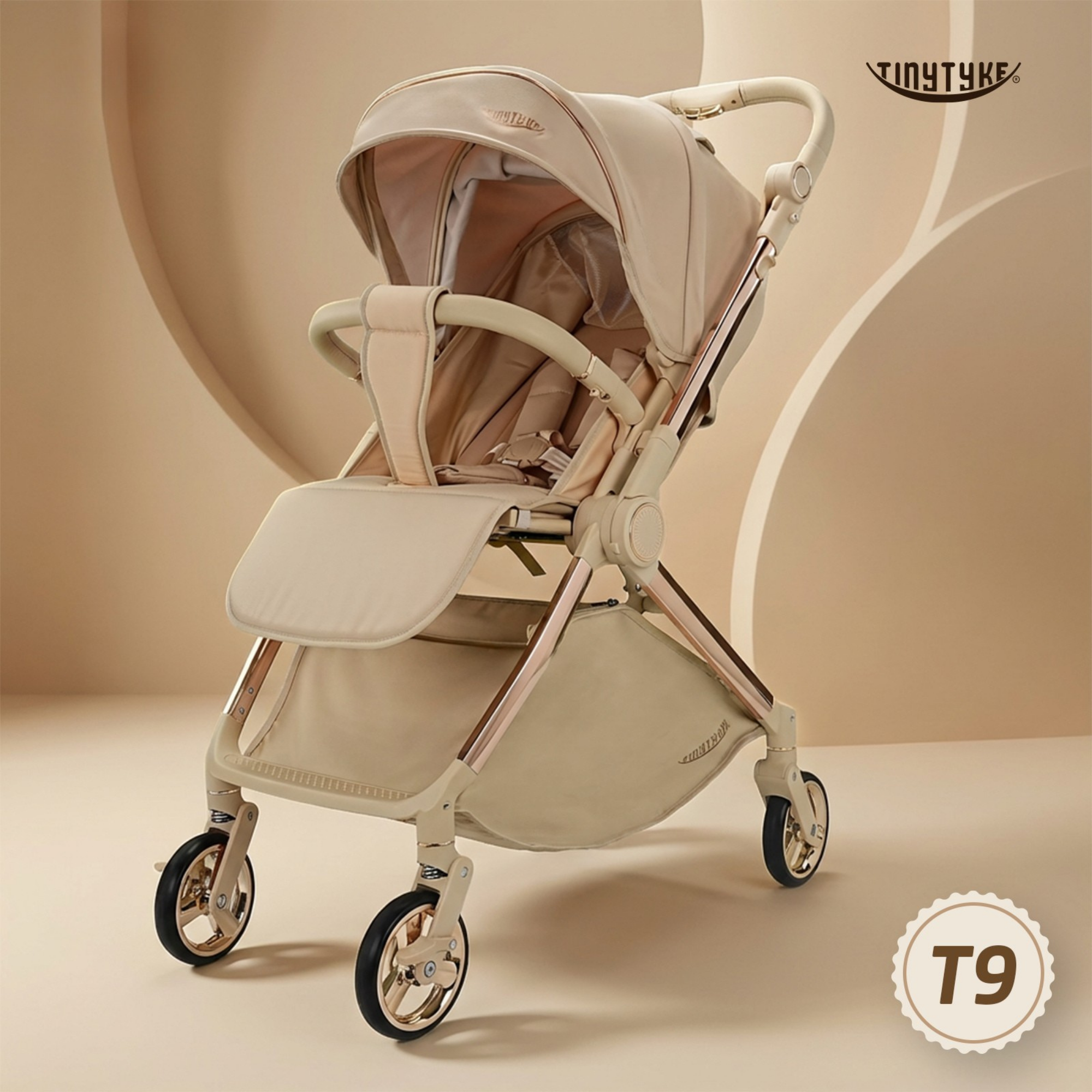
TinyTyke offers a range of baby strollers, including lightweight and foldable options and models with reversible handles or travel-system features. Features and age suitability vary by model, so check the product specifications before purchasing.
Make a shared outing checklist
Before leaving home, check that you have:
- Diapers and wipes.
- A change of clothes.
- Feeding supplies appropriate for your baby.
- A burp cloth or bib.
- Water and snacks for adults, and age-appropriate food for children who have started solids.
- Weather-appropriate clothing.
- Any required medicines or care items.
- Your phone and emergency contacts.
For car journeys, use an appropriate, correctly installed child car seat according to the child's age, size and the seat manufacturer's instructions. A stroller or a regular cradle is not a substitute for a car seat.
For additional guidance, read the American Academy of Pediatrics' advice on choosing a safe stroller.
9. Baby Products That Can Support Everyday Family Life
The right baby products are not necessarily the ones with the most features. They are the ones that fit your baby's stage, your family's routine, your available space and your budget.
Here are four categories worth considering.
A. Automatic baby cradles for supervised soothing
Traditional ghodiyu designs are familiar to many Indian families. Modern automatic cradles add motorised rocking to the experience.
When comparing options, consider the product's construction, assembly requirements, operating instructions, maintenance and any age or weight limits. Features such as timers, speed adjustment, app control or power-bank compatibility vary by model.
Explore TinyTyke Automatic Baby Cradles.
If your family already owns a compatible manual cradle, you can also explore TinyTyke Cradle Automation Kits. Confirm compatibility with the exact cradle frame before buying.
Use any cradle only for its intended purpose, follow its instructions, and keep the baby appropriately supervised. Do not assume that rocking equipment is suitable for unattended or routine infant sleep.
B. Strollers for family outings
A stroller can make walks and outings more manageable, especially when several family members take turns taking the baby outside.
Choose a model based on your child's age and size, the places you visit, storage requirements and the people who will handle it.
Explore the TinyTyke Baby Stroller Collection.
C. Toys for exploration and play
A few well-chosen toys can offer plenty of opportunities for interaction.
Consider age-appropriate rattles, teethers, picture books, soft toys, blocks or simple pull-along toys for toddlers. Always check age labels and inspect toys regularly for damage or loose parts.
Browse TinyTyke Baby Play & Development Solutions.
D. Baby essentials for everyday care
Some of the most useful products are the everyday basics that help caregivers stay organised.
Depending on your baby's stage, these may include:
- Diapers and wipes.
- Bibs and burp cloths.
- Towels and washcloths.
- Feeding and nursing supplies.
- Dry sheets and suitable changing supplies.
- Storage organisers and travel bags.
- Age-appropriate hygiene products.
Before purchasing, consider what you already own, what needs replacing and what would genuinely make your daily routine easier.
Explore TinyTyke Baby Essentials or browse all TinyTyke products.
A useful shopping rule: Buy for your family's real needs rather than purchasing every item recommended by relatives, influencers or online lists.
10. A Practical Baby-Care Checklist for Indian Families
Use this checklist to help parents and other caregivers coordinate daily care.
Sleep and comfort
- Agree on a consistent, age-appropriate wind-down routine.
- Follow current safe sleep guidance.
- Keep the baby's sleep area clear of loose bedding and soft objects.
- Check that any cradle or other product is assembled and used according to its instructions.
Feeding and hygiene
- Share feeding instructions with every caregiver.
- Follow appropriate food preparation and storage guidance.
- Keep changing supplies and clean clothes accessible.
- Ask a healthcare professional about allergies, medicines or feeding concerns.
Play and learning
- Make time for talking, singing or reading.
- Offer toys suitable for the baby's current abilities.
- Provide safe, supervised opportunities for movement and exploration.
- Avoid small parts and other age-inappropriate hazards.
Travel and outings
- Check the stroller's age and weight requirements.
- Confirm that the harness and brakes work correctly.
- Pack diapers, wipes, spare clothes and feeding essentials.
- Use an appropriate child car seat for car travel.
Family communication
- Share important updates between caregivers.
- Agree on safety rules.
- Respect the parents' decisions while welcoming helpful support.
- Make time for parents to rest and ask for help when needed.
11. How to Create a Happier Parenting Partnership
A baby's arrival changes more than the daily schedule. It can also change relationships, expectations and responsibilities within the family.
A few small habits can help.
Ask before giving advice
Instead of saying, "You should do it this way," try, "Would you like to hear what worked for us?"
This keeps communication respectful and gives parents room to make informed decisions.
Divide responsibilities clearly
If grandparents are helping, agree on tasks that work for everyone. One person might help with meals while another spends time playing with the baby.
Parents should not feel that they must manage every detail alone, and grandparents should not feel that they must take responsibility for everything.
Make room for different parenting styles
Families may differ in language, routines, food preferences and traditions. Not every difference needs to become a disagreement.
Focus on the things that matter most: the baby's well-being, safety, emotional needs and appropriate development.
Remember the parents, too
Parents need support as they adjust to caring for a baby. Rest, nutritious meals, social connection and time to ask questions are important parts of family well-being.
Support does not have to be dramatic. Sometimes it means washing the bottles, preparing a meal, accompanying a parent to an appointment or simply listening without judgement.
12. Frequently Asked Questions About Grandparents, Parents and Baby Care in India
1. How do grandparents help with baby development?
Grandparents can support development by talking, singing, reading, playing and responding to a baby's cues. They can also help with everyday care and offer emotional support to parents. Activities should be suitable for the child's age and abilities.
2. Is joint family parenting better than nuclear family parenting?
Neither family structure is automatically better. What matters most is the quality of care, emotional support, safety, communication and consistency available to the child.
3. How can grandparents and parents follow the same baby-care routine?
Create a shared note with feeding instructions, sleep guidance, hygiene preferences, emergency contacts and any advice from the baby's healthcare professional. Keep communication simple and update one another when routines change.
4. What baby products are useful for Indian families?
Useful products depend on the child's age and the household's routine. Families may consider feeding supplies, hygiene essentials, age-appropriate toys, a suitable stroller and a cradle for its intended use. Check safety, quality, age suitability and budget before purchasing.
5. Is an automatic baby cradle necessary for every family?
No. An automatic cradle is an optional product, not a requirement for healthy development. Families should consider their preferences, budget, available space and product instructions. An automatic cradle should not be assumed to be a safe surface for routine infant sleep.
6. What should parents check before buying a baby stroller in India?
Check age and weight suitability, harnesses, brakes, seat support, folding mechanism, storage space, handling and suitability for the places you visit. For newborns, verify that the exact model is approved for newborn use and offers the support required by its manufacturer.
7. Which toys are suitable for babies and toddlers?
Suitable options depend on the child's age and abilities. Simple rattles, teethers, books, soft toys, blocks and toddler puzzles may be appropriate at different stages. Always check the age label, supervise play and avoid choking hazards.
8. How can working parents manage baby care with grandparents' help?
Agree on responsibilities, share essential care instructions, maintain a flexible routine and communicate regularly. Grandparents can help with suitable tasks while parents remain involved in important health, safety and developmental decisions.
9. How can parents balance traditional Indian practices with modern baby-care advice?
Keep traditions that create connection and are appropriate for the child. For health, feeding, sleep and safety decisions, rely on current evidence-based guidance and consult a qualified healthcare professional when needed.
10. Where can Indian parents find baby cradles, strollers, toys and essentials?
Parents can explore the relevant categories on TinyTyke's website, including automatic baby cradles, strollers, play and development toys and baby essentials. Compare product specifications and select items that suit your baby's needs.
13. Final Thoughts: It Takes Love, Understanding and Teamwork
From a grandmother's lullaby to a parent's carefully planned routine, family life shapes a baby's early experiences in countless ways.
Grandparents can bring wisdom, stories and support. Parents bring their own knowledge of the baby, along with the responsibility of making important care decisions. Together, they can create a family environment where the baby feels loved, protected and encouraged to explore.
Practical products such as automatic cradles for supervised soothing, suitable strollers for outings, age-appropriate toys and everyday baby essentials can support parts of this journey. The most meaningful investment, however, is the time, attention and care that family members give a child.
At TinyTyke, we believe that thoughtful baby products should fit into real family life—not make parenting more complicated.
Explore the TinyTyke collection and choose the essentials that suit your family's everyday routine.
Let's talk!
Every family has its own story.
What has helped your family most during the parenting journey—grandparents' support, a shared baby-care routine, helpful baby products or a little time for yourself?
Share your experience in the comments. Your story may help another parent feel understood and supported.