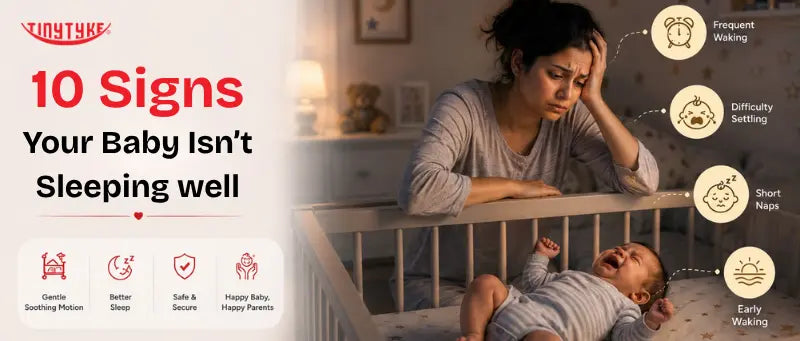
Quick Summary
|
Sign |
What It May Mean |
|---|---|
|
Difficulty settling |
Baby may be uncomfortable, overstimulated or overtired |
|
Frequent waking |
Can be normal, especially for newborns |
|
Very short naps |
May reflect developmental sleep patterns or difficulty settling |
|
Persistent fussiness |
Could indicate tiredness, hunger or discomfort |
|
Long periods awake |
Baby may be having difficulty returning to sleep |
|
Early waking |
Could relate to routine or developmental changes |
|
Day-night confusion |
Developing circadian rhythm may still be immature |
|
Changes in usual sleep |
Illness, teething, growth or other factors can affect sleep |
|
Daytime sleepiness |
May indicate insufficient or disrupted sleep |
|
Parent concern |
A valid reason to discuss sleep with your pediatrician |
Table of Contents
- How Do I Tell If My Baby Is Sleeping Soundly?
- 10 Indicators That Your Baby Isn't Sleeping Well
- What Are the Reasons Behind Baby Sleep Issues?
- How to Make Your Baby Sleep Better
- Safety First Before Everything Else
- TinyTyke Tip For Sleep
- When to Call Your Pediatrician
- Takeaways
- FAQs
How Do I Tell If My Baby Is Sleeping Soundly?
Sleeping for babies can be very puzzling for parents who are just beginning their journey into parenting.
While one baby may nap for two hours, another baby will wake up after only 30 minutes. While one baby will wake up several times throughout the night, another baby will sleep for longer periods of time.
This is completely normal. As noted by the American Academy of Pediatrics, different babies have different requirements in terms of sleeping time, the tendency to wake up and the time needed to fall asleep, as well as irregular sleeping cycle until 4 months of age.
Therefore, the question should not be limited to:
Instead, look at the overall pattern, your baby's age, feeding and development, and whether there are signs of persistent difficulty.
10 Indicators That Your Baby Isn't Sleeping Well
1. Your baby often has difficulties settling
Is your baby tired but still having problems getting to sleep? They might:
- Fuss
- Cry
- Look away
- Refuse to settle
- Require calming multiple times, Having an occasional problem settling down is normal, but it could mean your baby is: Tired, Uncomfortable, Hunger, Over-stimulated
Here is what you can do
Develop a basic wind-down process:
Eat → Burp → Dim lighting → Gentle interaction → Bedtime Sleep
Keep the routine predictable rather than complicated.
2. Your Baby Wakes Very Frequently
Waking often does not automatically constitute an issue.
Newborn infants may frequently wake up at night since they require food and attention. The NHS states that newborn babies frequently wake up in the initial months and that babies also have different sleeping styles.
It is critical to determine if the frequent waking is new, persists, or comes with other issues.
Look out for:
- Sudden changes in sleep
- Illness signs
- Issues with feeding
- Distress
3. Your Baby Takes Very Short Naps Every Time
A short nap now and then is not unusual.
However, if your baby always naps for such a short time and wakes up cranky or tired, you might want to consider the overall situation.
Some causes could be:
- Feeding issues
- Disturbances in environment
- Overtiredness
- Discomfort
- Developmental milestones
It should be noted that infants' sleep cycles are just forming, and thus short naps do not always mean poor sleep.
4. Your Baby Is Frequently Fussy Before Sleep
A fussy baby may signal that he/she needs to rest.
Look for:
- Yawning
- Turning his/her head away
- Less interest in the environment
- Fussiness
- Face rubbing
- Being harder to soothe
Respond to these signs before your baby gets really upset.
5. Your Baby Seems Overtired
When an infant is tired:
- They will be very cranky
- They won’t want to settle
- They will be more easily disturbed by noise
- It will be harder to settle them
Some new parents often try to keep their baby awake for a longer time because they think that when the baby is tired, he will sleep well.
This method does not always succeed.
6. Your Baby Has Long Periods of Night-time Wakefulness
Some babies will wake up briefly, feed, and then go back to sleep.
Other babies may be awake for long periods of time.
Newborn babies have not yet learned the difference between day and night. According to the NHS, daytime should be fairly bright and stimulating, and nighttime should be quiet.
You can try:
Daytime
- Open the curtains
- Household noises are fine
- Speak and interact with your baby
Nighttime
- Dim the lights
- Speak in a quiet voice
- Calm interactions
7. Your Baby's Sleep Suddenly Changes
A baby who usually sleeps in a certain manner will sometimes begin to wake up more often.
Some causes for a change in sleeping include:
- Growth spurts
- Teething
- Sickness
- Developments in development
- Change in schedule
According to the NHS, some factors affecting baby sleeping are growth spurts, teething, and sickness.
A minor change does not always mean there is a problem.
A major or prolonged change should be discussed with your baby's pediatrician, particularly when your baby is sick.
8. Your Baby Is Extremely Sleepy During the Day
Daytime drowsiness is to be expected to some extent.
However, if your baby appears very hard to wake up, feeds poorly, or otherwise acts abnormally, do not automatically blame it on the fact that he/she had a bad night.
Talk to your doctor if any of the following applies to your child:
- Hard to wake up
- Feeds poorly
- Lethargic
- Breathing problems
- Other symptoms of being unwell
Your doctor will help you sort out what is behind your problem.
9. Your Baby Only Sleeps Under Specific Conditions
There are babies who fall asleep only if they get rocked, cuddled, or put into bed after feeding.
This is not an issue in the newborn stage.
According to AAP guidelines, there is a process of developing a sleep pattern, and the sleeping pattern changes during the whole year.
Rather than being concerned about creating "bad habits" from the very beginning, try to concentrate on:
- Sleep safety
- Feeding
- Comfort
- Consistency
- Age appropriate expectations
When your baby starts growing up, you will be able to make some alterations to your routine.
10. Your Baby's Sleep Problems Are Affecting the Whole Family
Often, it is not the exact amount of wake-ups that is an indicator of when professional help should be considered.
Rather, it is the effect that all this has.
In case you experience sleep issues in your baby that cause:
- Severe fatigue
- Stress
- Anxiety
- Inability to function normally
- Worries about your baby’s health
- You should consult your doctor
The NHS stresses that long-lasting sleep deprivation may make you tired both physically and psychologically and encourages consulting a partner or your family and friends.
Why Isn't My Baby Sleeping Well?
There could be various reasons for sleep problems.
Developmental Issues
Babies experience sleep changes in their first year of life.
Hunger
Baby is hungry most of the times when he wakes up at night.
Overtiredness
Delaying response to baby’s tiredness will cause difficulty to settle down.
Environment
Light, temperature, or noise can make baby uncomfortable.
Illness/Discomfort
Irritation, cold, fever, teething pain, etc. may lead to sleep disruption.
Day & Night Mix Up
The newborn is not yet aware of day & night difference.
Routine Changes
Moving from one place to another, visitors, or changes at home.
How to Help Your Baby Sleep Better
1. Establish Sleep Cues
Establish cues prior to bedtime by:
Turning down lights
Lowering voice tone
Feeding
Changing the diaper
Soothing
A consistent place to sleep
2. Recognize Early Sleep Cues
Do not wait for time on a clock.
Notice signs of being sleepy and let your baby have the chance to sleep.
3. Maintain Quietness at Night
Do not turn nighttime wake up periods into play time.
Make sure that nighttime feedings, diaper changes and comforting are quiet activities.
4. Make Sleep Space Safe
Keep the sleeping environment simple and free from distractions.
Infants should sleep on their backs on a firm, flat and noninclined surface, without any soft objects including blankets and toys in the sleep area.
Safe Sleep Comes First
There is no sleep practice that is more essential than safe sleep.
For each and every sleep period:
- Ensure your infant sleeps on his or her back.
- Have a hard, flat sleeping surface.
- Have a tight fitting sheet for the sleeping area.
- Remove any type of pillow from the sleeping area.
- Remove all soft bedding and toys.
Do not put your infant to sleep on a sofa, armchair or other hazardous surface.
Always follow all instructions given by the manufacturer for all baby products.
Room sharing without bed sharing is recommended by the AAP.
What About Automatic Baby Cradles?
Parents will search for items that could facilitate this process of soothing their babies.
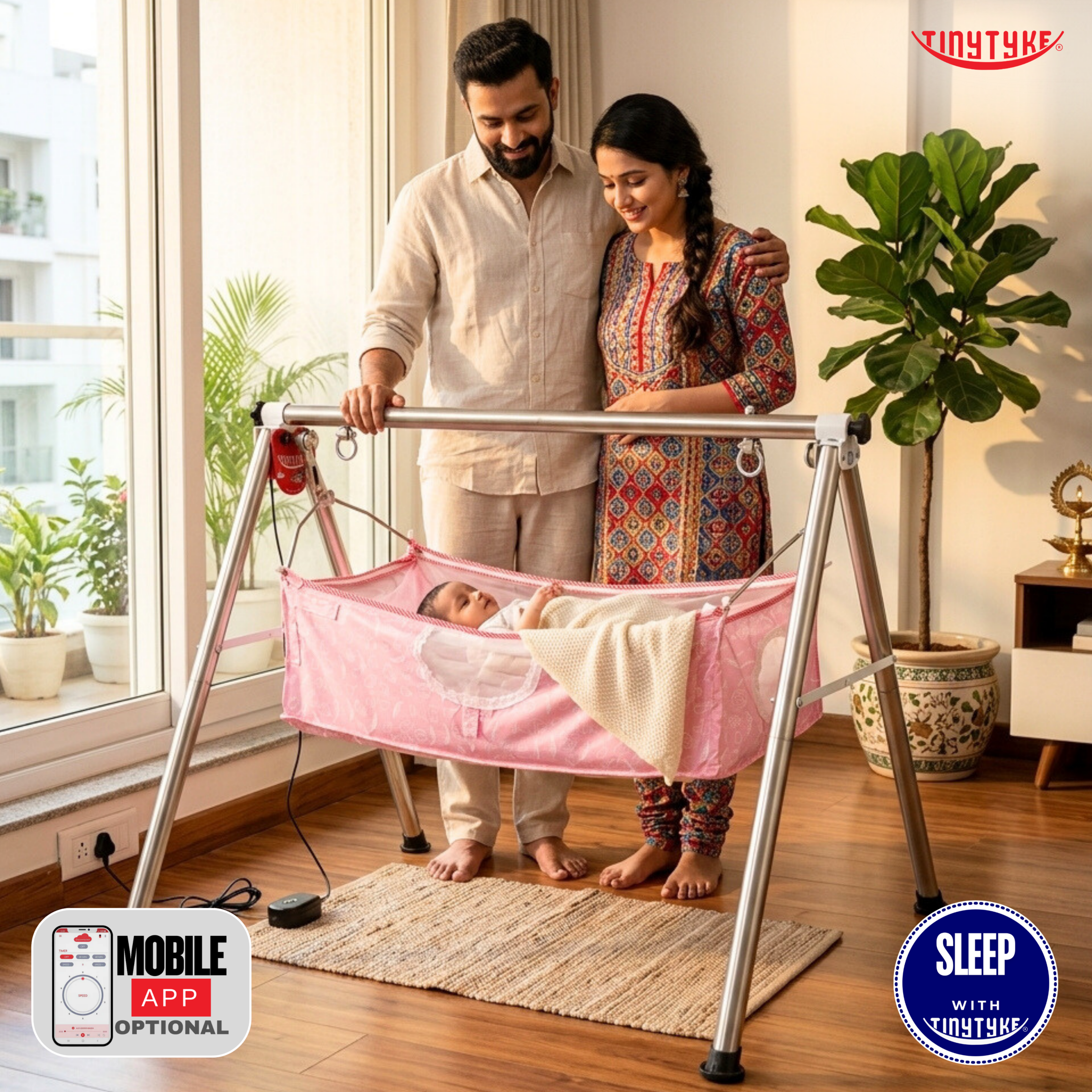
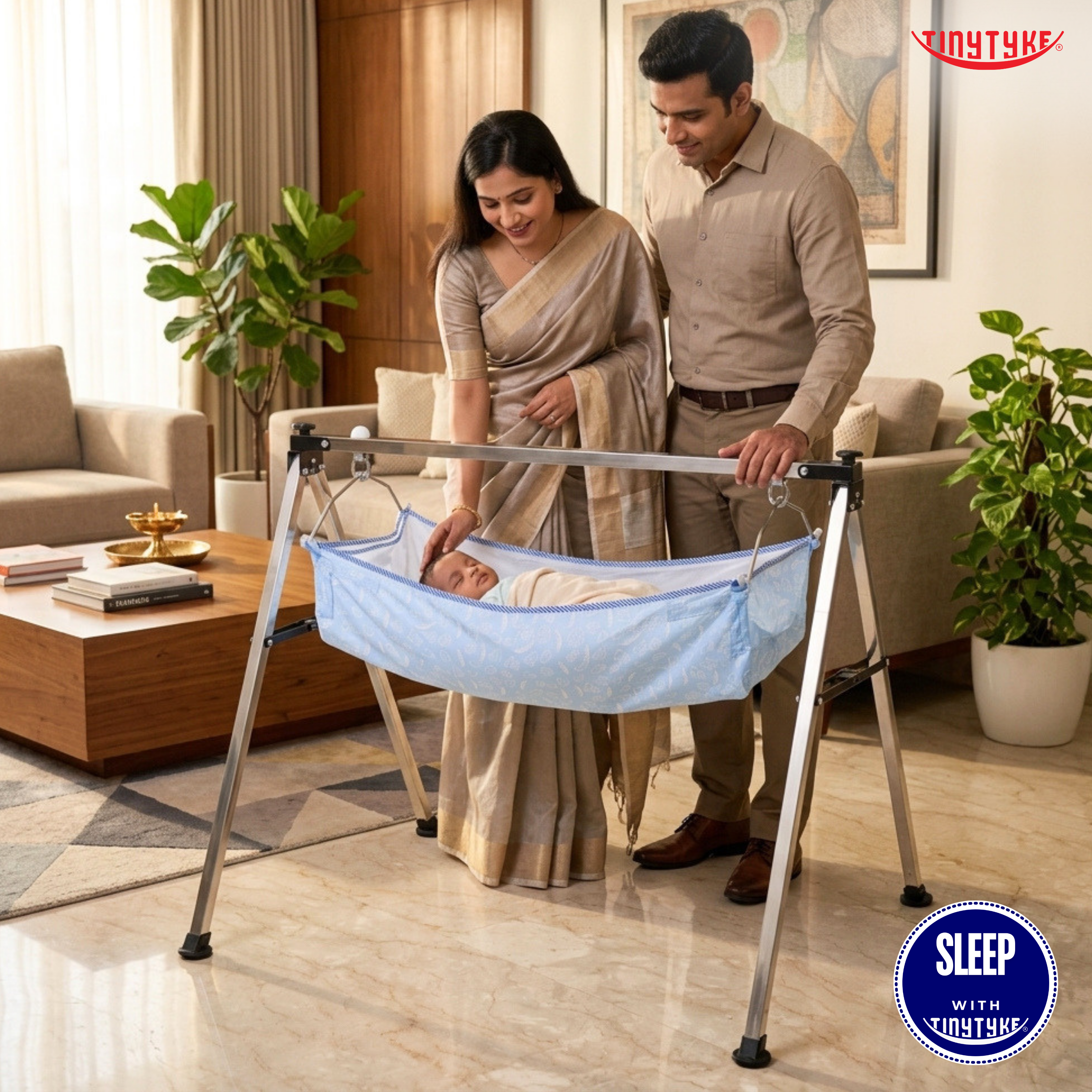
Automatic baby cradles by TinyTyke will offer motorized soothing options, depending on the particular product, with adjustable motions and foldable options.
However, parents must differentiate between:
Soothing the baby,
And
Offering a safe surface for sleeping.
An automatic product must always be used in accordance with all its instructions and the purpose for which it was designed.
With respect to routine sleeping of an infant, please consult safe-sleep guidelines.
TinyTyke Sleep Advice
Good infant sleep doesn’t rely on finding the magic product.
Healthy sleep patterns involve:
Safe sleep + feeding + comfort + sleep signals + consistency + patience
The use of TinyTyke’s baby cradles can be one component of the soothing ritual that families may engage in, where relevant. Apply the product in accordance with its directions along with safe-sleep practices based on evidence.
Check out TinyTyke Baby Cradles → Click Here!
Baby Sleep Check: 5 Questions for Parents
Think about the following questions:
1. Is my baby’s sleeping pattern correct according to their age?
-It varies greatly between newborns and older babies.
2. Is my baby eating right?
-When you have a problem with your baby's feeding and unusual sleepiness, it is necessary to visit a doctor.
3. Is my baby sleeping safely?
-Check the place where your baby sleeps and its surroundings.
4. Did something sudden happen?
-Sometimes a sudden change in behavior can mean that your baby is ill.
5. Am I absolutely tired?
-Your state of health is also important.
When Should You Contact a Pediatrician?
Consult your pediatrician should you observe any of the following:
-An abrupt or lasting change in sleeping habits
-Having trouble awakening your baby
-Feeding problems
-Problems breathing
-Lethargy
-Frequent distress
-Indications of illness
Any problems with growth or development
Do not attempt to diagnose an illness based on sleep patterns alone.
Key Takeaways
- Sleep is naturally irregular for newborns.
- It does not mean that the baby will not sleep well just because she wakes up frequently.
- Instead of concentrating on a tough night, pay attention to patterns.
- Observe signs of fatigue and hunger in your baby.
- Keep night hours tranquil and routine.
- Safe sleep environment must always come first.
- Abrupt changes, excessive sleepiness, and poor feeding call for a doctor's visit.
- Both parents need rest and support.
- Baby sleep evolves with time, hence realistic expectations based on age are recommended.
Frequently Asked Questions
1.How do I know if my baby isn't sleeping well?
- Look out for difficulty settling, shortened or poor sleep, long periods awake at night, and/or a substantial change from what is usual for your baby. Be aware though that frequent waking is common among newborns.
2. Is it okay for my baby to wake up frequently?
- Yes. It is normal for many babies to frequently wake up. This includes waking for food.
3. How much sleep does my baby need?
- Sleep requirements differ according to baby and age. Never compare your baby's sleep to that of another baby. If you have any concerns, consult your pediatrician.
4. My baby wakes up every hour! Why?
- There could be several reasons including hunger, typical behavior of newborns, discomfort or difficulties with falling asleep.
5. What are the symptoms of a tired baby?
- Fussiness, difficulties with settling down, looking away, yawning, and being progressively harder to soothe.
6. How can I help my baby get better sleep?
- Provide sleep cues, be quiet at night, watch out for tiredness cues, and provide a sleep-safe environment.
7. Will an automatic cradle help my baby sleep?
- An automatic cradle may help calm a baby, however, it shouldn't be seen as a sleep-safe device. Be sure to always follow manufacturer's instructions.
8. Should my baby sleep in a swing?
- Sleeping regularly in a swing isn't recommended. AAP recommends a flat, firm and non-inclined sleep surface for infants.
9. When should I be worried about my baby's sleep?
- Consult with a pediatrician if there is any abrupt change in sleep pattern with feeding issues, troubles waking up, breathing problems, lethargy, or signs of illness.
10. Can parents stress affect baby sleep?
- Parents exhaustion can make newborn times much more challenging. Getting some assistance may help parents handle the lack of sleep.
Is Your Baby Getting Enough Sleep?
The key to developing a good routine is being able to recognize your baby's sleep signs.
Get your copy of the TinyTyke Sleep Routine Checklist for Newborns that will help you understand baby sleep signs.
Download Newborn Sleep Checklist