Understanding Newborn Sleep patterns & Age Related Expectations
- Newborns sleep 14-17 hours a day in short 2-4 hour chunks, and no natural rhythm is developed until 6-8 weeks.
- REM(Rapid Eye Movement) sleep accounts for 50% of newborn sleep (vs 20% in adults), resulting in frequent wake-ups and light sleep.
- Week-by-week progression: 0-2 weeks shows no day/night distinction; 4-6 weeks begins minor pattern emergence; 8-12 weeks begins consolidation.
Identifying Your Baby's Sleep Cues
- Eye rubbing, yawning, looking into space, and decreased activity are examples of early indicators that appear within this 15-20 minute range.
- Late cues (crying, arching back, frenetic movements) suggest overtiredness, making settling significantly harder
- Track wake windows: 0-4 weeks = 45-60 minutes, 4-12 weeks = 60-90 minutes of awake time between naps
- To determine your baby's unique sleep patterns and ideal time, keep a sleep journal for three to five days.
Distinguishing Newborn Sleep Myths From Reality
- Never wake a sleeping baby" is a myth. Reality: Daytime feedings every 2-3 hours prevent excessive day sleep that alters night patterns
- Myth: "Babies who eat rice cereal sleep for longer." Reality: Solid foods before 4-6 months give no sleep benefit and pose safety issues
- Myth: "You can begin sleep training right away" The truth is that formal sleep training isn't safe or developmentally suitable until at least four to six months of age.
Establishing The Ideal Bedtime Routine & Sleep Environment
Creating A Secure & Calm Sleep Environment
- Use a hard mattress with only fitted sheets while you're alone, on your back, or in a crib. Take off any loose bedding, pillows, and blankets.
- Keep the room between (20 and 22°C), and clothe the infant in one layer more than what is comfortable for adults.
- To replicate a womb atmosphere and cover out domestic noises, utilize white noise put across the room at 50-65 decibels (Like Moderate Rain).
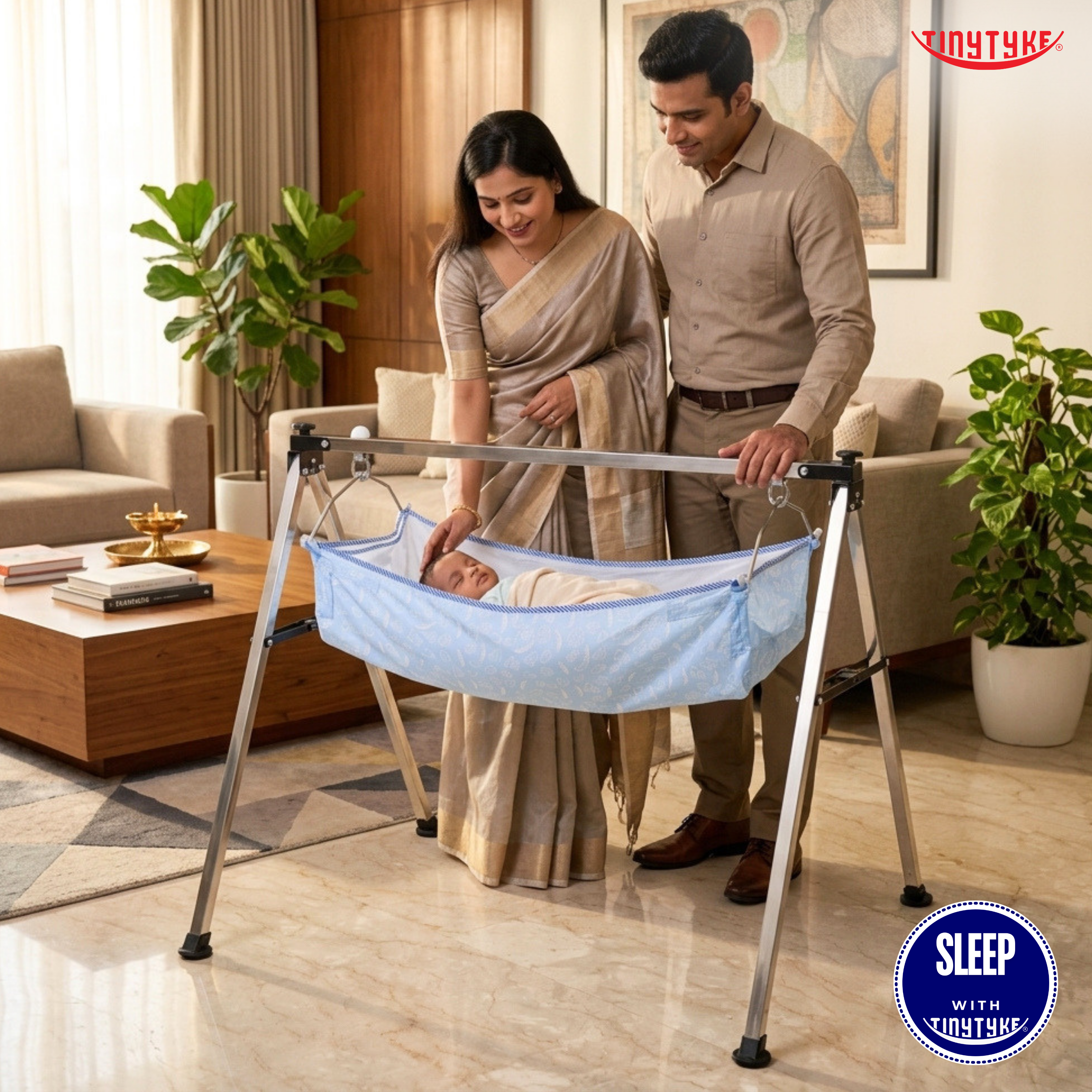
- Think about safe sleep options like the TinyTyke Square Hammock Pipe Kit With Mattress, which satisfies safe sleep regulations and offers a firm sleeping surface with mosquito net protection.
Developing Regular Pre-Sleep Routines
- Establish a 20-30 minute relaxation routine: Every night, feeding, a gentle massage, a warm bath, dark lighting, and a lullaby are repeated.
- To establish spatial association, begin the routine at signals of drowsiness rather than overtiredness and spend the last ten minutes in the sleep place.
- Put the baby in a "drowsy but awake" position so they can learn to be self-settling while still being quiet and sleepy.
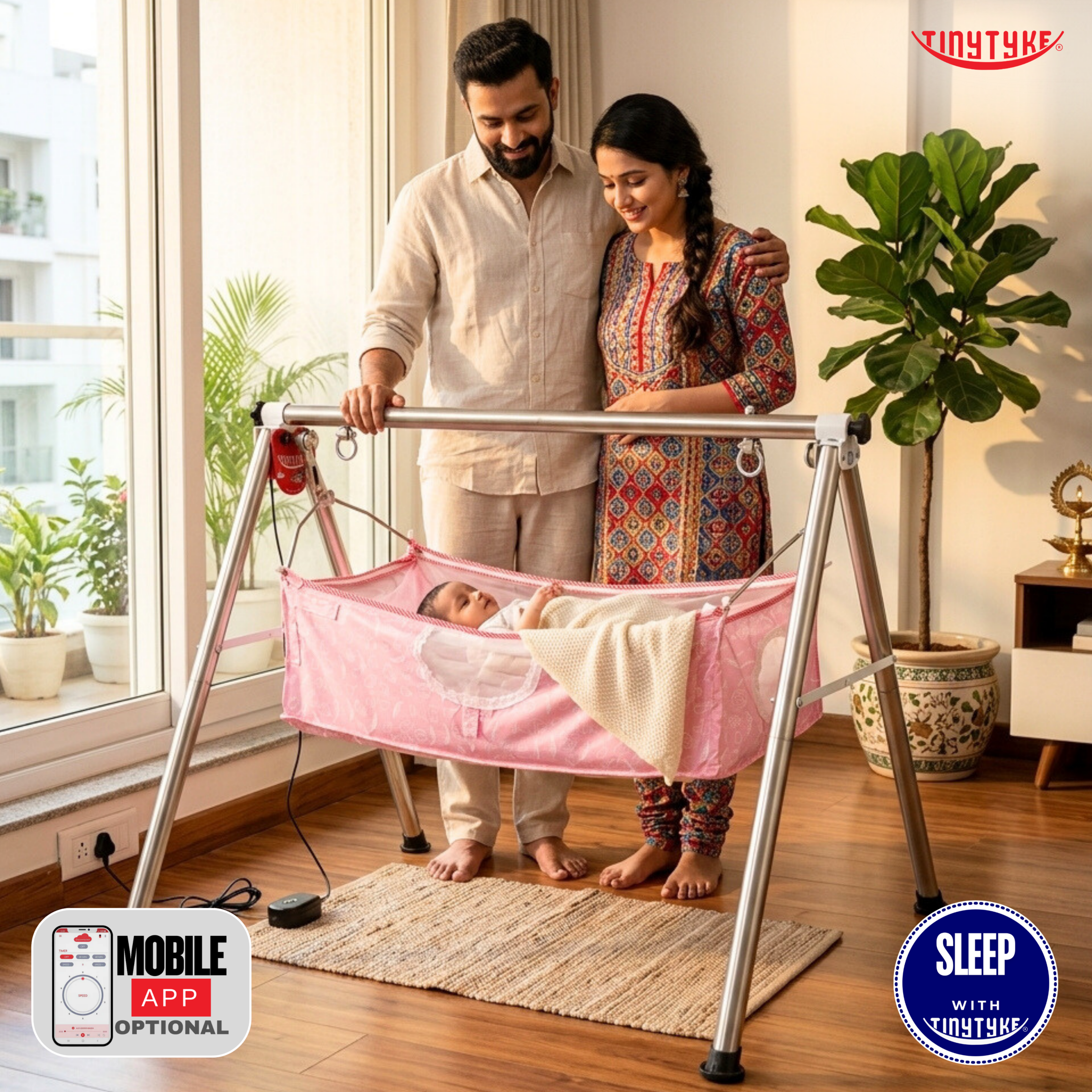
- An automatic electric swing cradle, such as the TinyTyke Modern Care Automatic Baby Cradle, can provide steady, calming movement that simulates parental rocking while letting parents relax. Use mild motion to soothe restless babies.
Taking Care Of Diaper Changes & Night Meals
- Avoid talking or making eye contact, use limited lighting (red or night bulbs), and make effective alterations to keep interactions dull at night.
- Feed in a darkened room while white noise is playing, burp softly, and then go back to sleeping without being disturbed.
- Dream feeding during the hours of 10 to 11 PM can prolong the baby's initial sleepstretch without completely awakening them.
- Gradually reduce feeding duration by 1-2 minutes weekly after 8 weeks if pediatrician approves, helping infant learn to sleep through hunger hormones
Motion & Portable Sleep Solutions: An Effective Approach
- The nervous system is activated by a gentle rocking motion, which triggers relaxing reflexes that are used for soothing rather than unmanaged sleep for the entire night.
- The TinyTyke Fully Foldable Automatic Cradle with mobile app control provides easy storage, mobility via power bank option, and convenient calming for families that require flexibility.
- Transition baby to flat, fixed surface once soundly asleep to conform with safe sleep recommendations
- To create sleep associations, be consistent and apply motion at the same time every night if it's part of your habit.
Improving Daytime Nap Strategies
- Separate day from night: take a nap in a room with less noise from the home, and save the silence and darkness for the evening.
- After four weeks, limit individual naps to two to three hours in order to maintain sleep pressure and appetite patterns at night.
- For 30-minute cycles, practice "nap rescue" by letting the infant relax for 5-10 minutes before patting or feeding them.
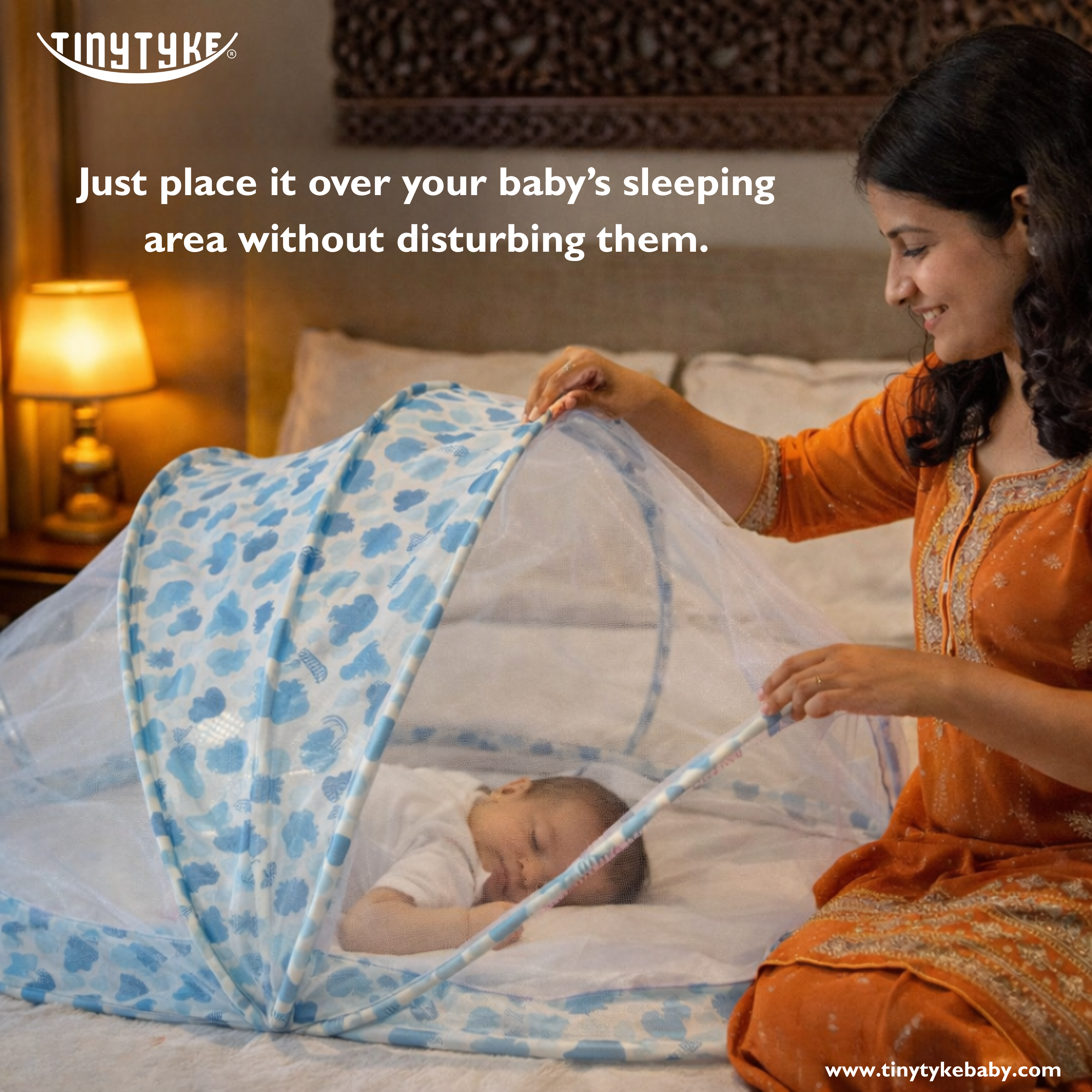
- For midday outdoor naps, use protective sleep equipment like the TinyTyke Simple Hammock With Mosquito Net, which offers mild support and bug protection while preserving a safe sleeping position.