Quick Summary
|
Common Mistake |
Better Approach |
|
Expecting newborns to sleep through the night |
Expect frequent waking for feeding and care |
|
Adding pillows, blankets or toys |
Keep the sleep space clear |
|
Putting baby to sleep on their side or stomach |
Place baby on their back for every sleep |
|
Using a swing for routine sleep |
Move a sleeping baby to an appropriate sleep surface |
|
Creating a strict schedule immediately |
Follow baby's cues and build consistency gradually |
|
Keeping baby awake to "make them tired" |
Watch for early tiredness cues |
|
Changing routines every night |
Keep bedtime cues predictable |
|
Comparing your baby with others |
Remember that sleep patterns vary |
|
Ignoring parental exhaustion |
Share nighttime responsibilities and seek support |
|
Assuming every sleep problem needs sleep training |
Consider age, feeding, development and health first |
Table of Contents
- Why Baby Sleep Can Be So Confusing
- Common Baby Sleep Mistakes
- Mistake 1: Expecting a Newborn to Sleep Through the Night
- Mistake 2: Creating an Unsafe Sleep Environment
- Mistake 3: Using Swings or Rockers for Routine Sleep
- Mistake 4: Following a Rigid Schedule Too Early
- Mistake 5: Missing Your Baby's Sleep Cues
- Mistake 6: Keeping Baby Awake Too Long
- Mistake 7: Making Nighttime Too Stimulating
- Mistake 8: Comparing Your Baby's Sleep
- Mistake 9: Changing the Routine Constantly
- Mistake 10: Forgetting About Parent Sleep
- Building a Healthy Baby Sleep Routine
- TinyTyke Sleep Tips
- Baby Sleep Safety Checklist
- Key Takeaways
- Frequently Asked Questions(FAQs)
Common Baby Sleep Mistakes
Very few things are able to prepare parents for the randomness of infant sleep.
In one night, your child might sleep for an extended period, while on the following night, he/she might keep waking up. Twenty minutes may be spent in trying to settle the baby, but he/she will end up waking up soon after.
Parents often wonder:
"Am I doing something wrong?"
Not normally.
Babies sleep differently from adults. Sleep in infants is variable since they have varying sleep patterns and also wake up several times for feeding and comfort. The NHS suggests that infants have their own sleep patterns and that some may sleep in short spells, while others may sleep in longer periods.
It is not about perfect sleep at the baby stage.
Expecting a Newborn to Sleep Through the Night
A major mistake that new parents often make is to assume that a newborn should be sleeping for eight or more hours.
Newborn babies have small tummies and tend to wake up for feeding. In addition, their cycle of being awake and asleep is yet to establish.
What to do instead
It is important to:
Feed your baby appropriately.
Observe your baby’s sleep signals.
Maintain a quiet environment during nighttime interactions.
Help your baby distinguish the night from the day.
According to NHS, it is important to maintain a bright and stimulating atmosphere during the day and keep nighttime interactions quiet and dark.
To note: frequent waking up does not mean your baby’s sleep is “bad.”
Creating an Unsafe Sleep Environment
One of the biggest baby sleep errors that is not related to having a schedule is one related to the sleep environment.
According to the American Academy of Pediatrics, babies should be placed on their backs for all sleeps on a hard, flat, non-inclined sleep surface intended for babies, with just a fitted sheet and no additional soft bedding or items.
Do not put the following things in the sleep area:
Pillows
Blankets
Quilts
Plushies
Sleep positioners
Other soft things
Simplicity in the sleep environment is usually the best policy.
Using a Swing, Rocker or Car Seat for Routine Sleep
It is especially important, since babies frequently fall asleep while being carried in moving or sitting products.
The swings, rockers, car seats and other sitting devices can be handy in performing the specific purpose, but they should not necessarily be considered sleeping places.
It does not advise routine sleep in sitting devices like swings, car seats, and baby carriers.
In case your baby falls asleep in the swing or another sitting device, transfer him or her to a proper sleeping surface as soon as possible.
TinyTyke Tip
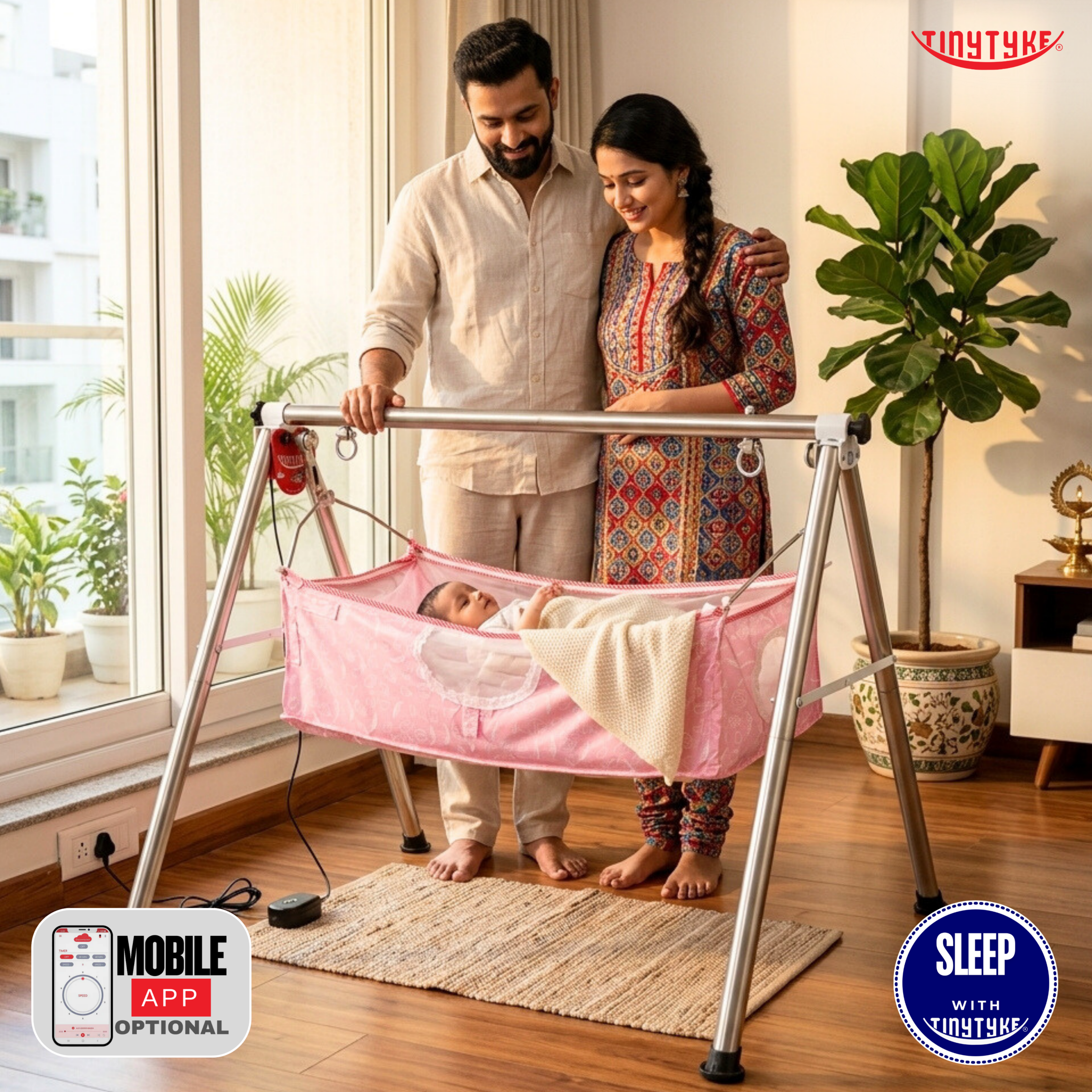
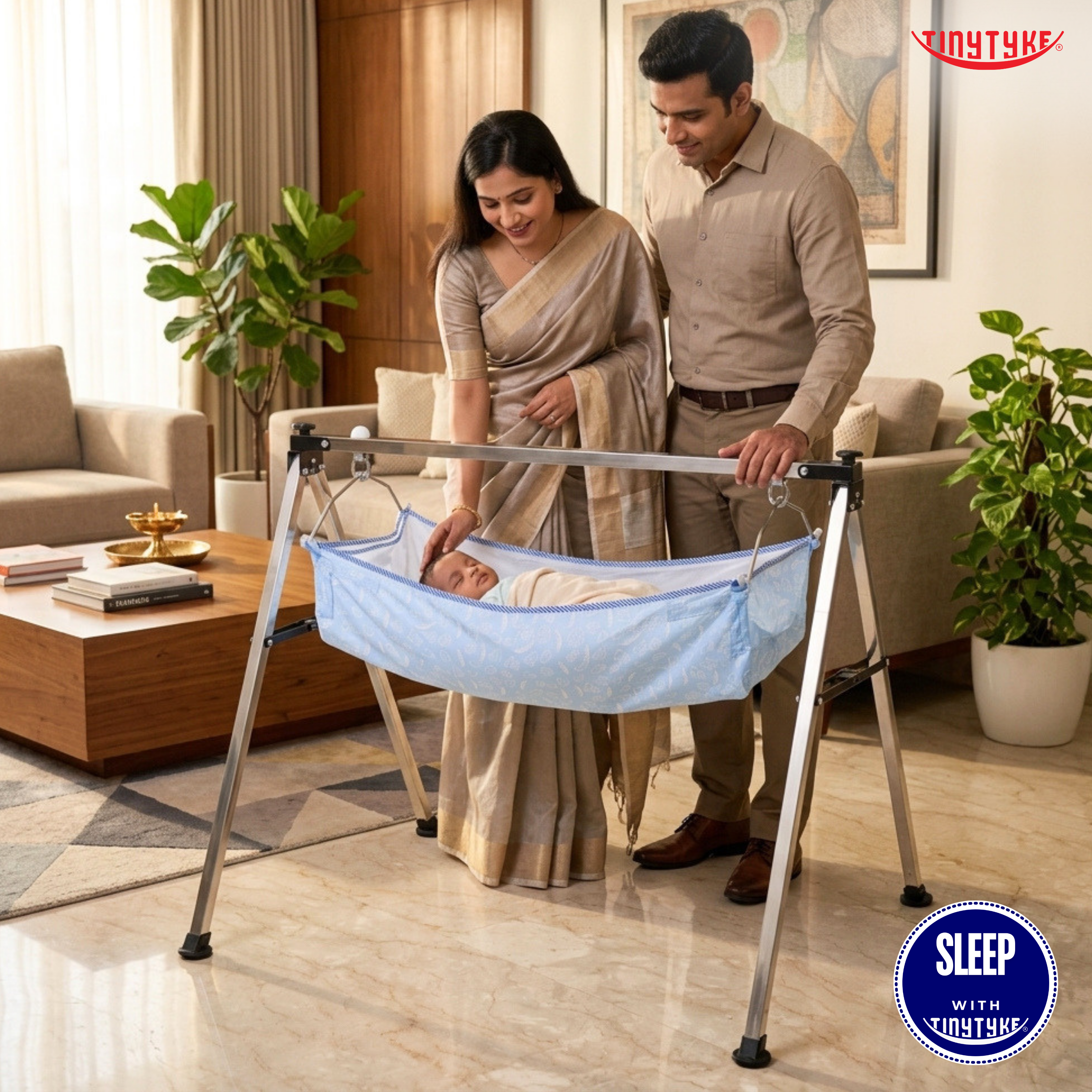
An automatic cradle can be useful as part of a baby's soothing routine only in accordance with the intended purpose of a certain product.
Don't think that the automatic rocking process makes a certain product suitable for routine infant sleep.
Following a Rigid Sleep Schedule Too Early
New parents are known to look for a rigid sleep schedule for their newborns.
However, sleep of newborns is always unpredictable.
Your baby will sometimes sleep for more hours than other days. The feeding habits, growth, developmental stage and temperament all influence the sleeping pattern.
Rather than following a fixed schedule:
Develop consistent sleeping cues.
This may include:
Feeding > Burping > Reducing light > Changing diaper > Comforting > Sleeping
The sequence of events does not have to be always the same.
You should only ensure that your baby learns the signs that point out sleep is approaching.
Missing Your Baby's Sleep Cues
Crying is not necessarily a symptom that the baby is tired.
Some early signs of tiredness are:
Turning their head away
Getting quiet
Yawning
Decreased interest in the environment
Slowing down
Fussiness
Once babies become overtired, they may become harder to settle.
What to do
Observe your baby rather than the clock.
Eventually, you will recognize your baby’s own signs of tiredness.
Keeping Baby Awake to "Make Them Sleep Longer"
This is a typical misunderstanding.
It’s like parents say:
“Since I keep my child up longer, he will be more tired and fall asleep better.”
For most babies, being overtired may even worsen their ability to calm down.
Instead of making awake intervals longer on purpose, watch your baby’s natural awake cycles and signs.
Do remember that newborn babies have different expectations than older babies.
Making Nighttime Too Stimulating
When your baby awakens at 2 a.m., it may be tempting to switch on the lights, chat, play, or do housework.
However, a more peaceful bedtime routine will encourage your baby to understand the difference between day and night.
During the day:
Draw up the curtains.
Be exposed to normal household sounds.
Chat with your baby.
At night:
Maintain low lighting.
Speak in a low voice.
Interact peacefully with your baby.
Feed and change your baby if necessary.
Get back into bed after caring for your baby.
This is in line with the NHS advice for encouraging day and night differentiation in babies.
Comparing Your Baby's Sleep With Other Babies
There is one baby who sleeps for three hours.
Another one wakes up every hour.
Your friend’s baby sleeps through the night.
And then you begin to wonder:
Why is my baby not doing so?
The reality is that baby sleep differs quite much.
According to the NHS, some babies sleep longer periods whereas others sleep for shorter periods, and each baby forms his/her sleep pattern.
What you should actually be questioning is:
Does my baby eat properly?
Does my baby gain weight properly?
Is my baby well enough?
Is the sleeping environment safe?
Am I responding to my baby's cues?
Changing the Routine Constantly
Doing something new every day might make it hard for you to figure out what is really good for your baby.
Monday: rock.
Tuesday: total quiet.
Wednesday: play music.
Thursday: change sleep schedule.
Friday: do something completely different from the rest.
On the other hand, you could stick to a couple of calming triggers.
Here are a couple of examples:
Dim lighting + feeding + burping + soft voice + same place for sleep.
Forgetting About Parent Sleep
One of the major errors with infant sleep is concentrating so much on the sleep of the baby that parents forget about their own sleep entirely.
Infant care is exhausting.
Share duties where possible.
For example:
Parent 1: Night duty
Parent 2: Early morning duty
Or share feeding duties, diaper changing and household duties as per your situation.
Seek practical assistance from your relatives where possible.
Just remember:
Sleep is not an option but rather it is one of the ways to care for your family.
A Better Approach to Newborn Sleep
Rather than attempt to correct your infant's sleep right away, consider five principles:
1. Safety
Establish a safe sleeping environment.
2. Responsiveness
Attend to the baby's needs for feeding and soothing.
3. Consistency
Reinforce sleep-related signals.
4. Flexibility
Understand the variability of newborn sleep.
5. Patience
Be patient with your baby's developing sleep-wake cycle.
Creating a Healthy Newborn Bedtime Routine
An example of a simple routine may include:
Step 1: Feeding
Ensure your baby gets a chance to have an appropriate feeding.
Step 2: Burping
Burp your baby when necessary based on the feeding.
Step 3: Lowering Stimulation
Lower light and sounds.
Step 4: Diapering
Change the diaper if it is required.
Step 5: Soothing
Soothe your baby through appropriate methods such as gentle talking, cuddling, etc.
Step 6: Sleep
Have your baby get into the right sleep place.
No need for a complex routine.
Just keep it simple.
TinyTyke Sleep Tip
Parents usually purchase a cradle with the hope that the cradle will solve all of their baby’s sleep problems.
It is more helpful to see a cradle as an integral part of a larger sleep routine.
The TinyTyke manual and automatic cradles can be part of a family’s relaxing routine when deemed suitable by parents, but parents need to always refer to the product instructions and the latest safe-sleep guidelines.
For routine infant sleep, focus on a sleep surface that adheres to current safe-sleep standards. The App recommends a firm and flat non-inclined sleep surface with only a fitted sheet on it.
Explore TinyTyke Baby Cradles
Baby Sleep Safety Checklist
Prior to laying your baby down to sleep:
Put baby on their back.
Use a hard, flat, uninclined sleeping surface made specifically for infants.
Use the correct fitted sheet for the mattress.
Do not use pillows in the sleep environment.
Do not use blankets or quilts in the sleep environment.
Do not use toys or stuffed animals in the sleep environment.
Do not regularly have baby sleep in swings, rockers, and other sitting positions.
Keep baby's sleep environment in the parents' bedroom, if possible, but not in the same sleep surface.
Check the age and weight restrictions on the product.
Always follow the manufacturer’s guidelines.
When Should Parents Talk to a Pediatrician?
Talk to your baby’s pediatrician if you have concerns regarding:
Problems feeding
Weight gain issues
Excessive sleeping
Respiratory problems
Symptoms occurring at night time
Consistently having trouble falling asleep, possibly due to pain or illness
Any unusual changes in your baby’s usual behavior
Don’t always think that your baby’s sleep problems are caused by behavioral issues. Sometimes there may be other causes behind your baby’s sleep changes.
Key Takeaways
It is not normal for babies to sleep through the night.
Safe sleeping should always come before sleep training.
Place your baby to sleep on his/her back.
Provide your baby with a firm, flat, and inclined-free sleeping surface.
Avoid placing any pillows, soft toys, and blankets in the sleeping area.
Avoid using any seating device such as a swing as a sleeping space for your baby.
Look out for your baby’s sleep signals, rather than enforcing a strict schedule.
Keep nighttime activities quiet and low-key.
Avoid comparing your baby to someone else’s baby.
Parents need rest too.
Frequently Asked Questions
1. What are some common errors when putting babies to sleep?
Some common errors include having unrealistic expectations about a baby sleeping all night, using dangerous bedding, attempting to develop a strict schedule before being ready, failing to recognize when the baby is tired and letting the baby routinely sleep in the sitting position.
2. Why doesn't my baby sleep all night?
Newborns usually wake up due to hunger and developing circadian rhythms. There is a wide variability in baby's sleep behavior.
3. Do I need to place my baby in the sideways position while he sleeps?
No. Placing babies in the back position for all sleeps.
4. Can I use a swing for my newborn's naps and night-time sleep?
The swing should not be used for sleep. If the baby falls asleep in the swing, transfer him/her to the proper sleeping surface as soon as you can safely do that.
5. Is it good to use pillows for newborns?
No. Pillows should not be used for babies.
6. How can I develop a newborn's sleeping schedule?
Use simple routines like dim lights, feeding, diaper change, soothing interaction and the proper sleep place.
7. Do I have to keep my newborn awake during the daytime?
Babies require much sleep. Instead of keeping the baby awake, let him/her sleep and learn individual cues of fatigue.
8. Are frequent awakenings in newborns normal?
Yes. This happens very often at the newborn stage, and there is much variability between individual babies' sleep habits.
9. How long does a baby need to sleep?
This depends on the age and the individual baby's needs. Don't focus only on one number, discuss the baby's sleep, eating and development with your pediatrician.
10. When should I introduce a bedtime routine?
You can begin with simple sleep routines in the first weeks. Keep it flexible because newborn sleep patterns are changing.
Better Baby Sleep Starts With Better Habits
Your baby does not require a perfect sleep routine, but rather a safe place to sleep in. Learn how to give the best to your little one by downloading the TinyTyke Newborn Sleep Schedule Checklist.
Download Newborn Sleep Checklist
Discover TinyTyke Baby Cradles