Quick Summary
| Common Reason | What Parents Can Try |
|---|---|
| Light sleep | Wait until your baby is settled before transferring |
| Startle reflex | Make transfers slow and gentle |
| Change in movement | Reduce sudden movement |
| Change in temperature | Keep the sleep environment comfortable |
| Hunger | Check feeding needs |
| Wet diaper | Check and change when needed |
| Overtiredness | Watch your baby's sleep cues |
| Sleep association | Build consistent calming sleep cues |
| Need for soothing | Use a calm and predictable bedtime routine |
Table of Contents
- Why Does My Baby Wake Up When I Put Them Down?
- Your Baby May Still Be in Light Sleep
- The Startle Reflex Can Wake Your Baby
- Your Baby Notices the Change From Your Arms
- Your Baby May Be Overtired
- Hunger or Discomfort May Wake Your Baby
- Your Baby May Be Used to Rocking
- The Transfer May Be Too Sudden
- Your Baby Is Still Developing Their Sleep Pattern
- Gentle Rocking May Be Soothing for Some Babies
- Can an Automatic Baby Cradle Make Things Easier?
- What About a Traditional Indian Ghodiyu?
- How to Choose an Automatic Baby Cradle
- Frequently Asked Questions
- Final Thoughts
Why Does My Baby Wake Up When I Put Them Down?
You finally get your baby to sleep.
You carefully rock them.
You wait.
You slowly stand up.
You gently put your baby down…
And suddenly:
Eyes open. 😭
If you've ever wondered, “Why does my baby wake up every time I put them down?”, you're not alone.
This is a common challenge for new parents.
Babies can wake during a transfer for several reasons, including changes in movement, temperature, position, sleep stage, hunger, discomfort or their need for comfort.
The good news?
Understanding the reason can help you create a calmer and more predictable sleep routine.
1. Your Baby May Still Be in Light Sleep
One of the most common reasons babies wake after being put down is that they may still be in a lighter stage of sleep.
Your baby may look completely asleep in your arms, but a small change in position or movement can wake them.
What can parents do?
Try to transfer your baby slowly and gently once they appear settled.
Avoid sudden movements, bright lights or unnecessary noise.
Every baby is different, so finding the right timing may take some patience.
2. The Startle Reflex Can Wake Your Baby
Young babies have a natural startle response, commonly called the Moro reflex.
A sudden movement or change in position can cause your baby to:
- Move their arms
- Open their eyes
- Startle
- Become unsettled
- Cry
This can make transferring a sleeping newborn surprisingly difficult.
Parent Tip
Keep movements slow and gentle when moving your baby from your arms to an appropriate sleep surface.
3. Your Baby Notices the Change From Your Arms
Your arms provide:
- Warmth
- Touch
- Movement
- Familiar smell
- Comfort
Then suddenly:
Warm arms → Still sleep surface
Your baby may notice that change.
This is one reason some babies sleep peacefully while being held but wake shortly after being put down.
4. Your Baby May Be Overtired
It may seem logical that a tired baby should sleep more easily.
But an overtired baby can sometimes be harder to settle.
You may notice:
- Fussiness
- Irritability
- Difficulty settling
- Frequent waking
- Increased sensitivity to noise and movement
Parent Tip
Rather than waiting until your baby is completely exhausted, pay attention to their individual sleep cues.
A simple and consistent bedtime routine can also help your baby understand that it is time to wind down.
5. Hunger or Discomfort May Wake Your Baby
Sometimes the problem isn't actually sleep.
Your baby may wake because they are hungry or uncomfortable.
Before settling your baby, consider whether they may need:
- Feeding
- A diaper change
- Burping
- A more comfortable temperature
- A change of clothing
- Attention for signs of illness or discomfort
If your baby regularly appears uncomfortable or you have concerns about feeding or sleep, speak with your pediatrician.
6. Your Baby May Be Used to Rocking
Does your baby fall asleep only when you rock them?
Your baby may have developed a familiar sleep association:
Rocking → Comfort → Sleep
So when the rocking suddenly stops, your baby may notice the change and wake.
This does not mean you have done anything wrong.
Rocking is a familiar soothing method for many families.
The goal is to gradually build other calming and consistent sleep cues as your baby grows.
7. The Transfer May Be Too Sudden
Imagine falling asleep in someone's arms and suddenly waking up somewhere completely different.
For a baby, that change can feel significant.
Try making the transition:
Slow. Gentle. Quiet. Consistent.
Keep the environment calm and avoid sudden changes in light, sound or movement.
8. Your Baby Is Still Developing Their Sleep Pattern
Newborn sleep isn't always predictable.
One day your baby may sleep well.
The next day they may wake frequently.
Sleep patterns change as babies grow and develop.
That's why parents shouldn't feel pressured to create a perfect routine immediately.
Focus on:
- A calm sleep environment
- Consistent bedtime cues
- Your baby's individual sleep signals
- Feeding and diaper needs
- Appropriate safe-sleep practices
Read More
👉 Newborn Sleep Schedule by Age: 0–6 Months
9. Gentle Rocking May Be Soothing for Some Babies
Many parents use gentle rocking as part of their baby's calming routine.
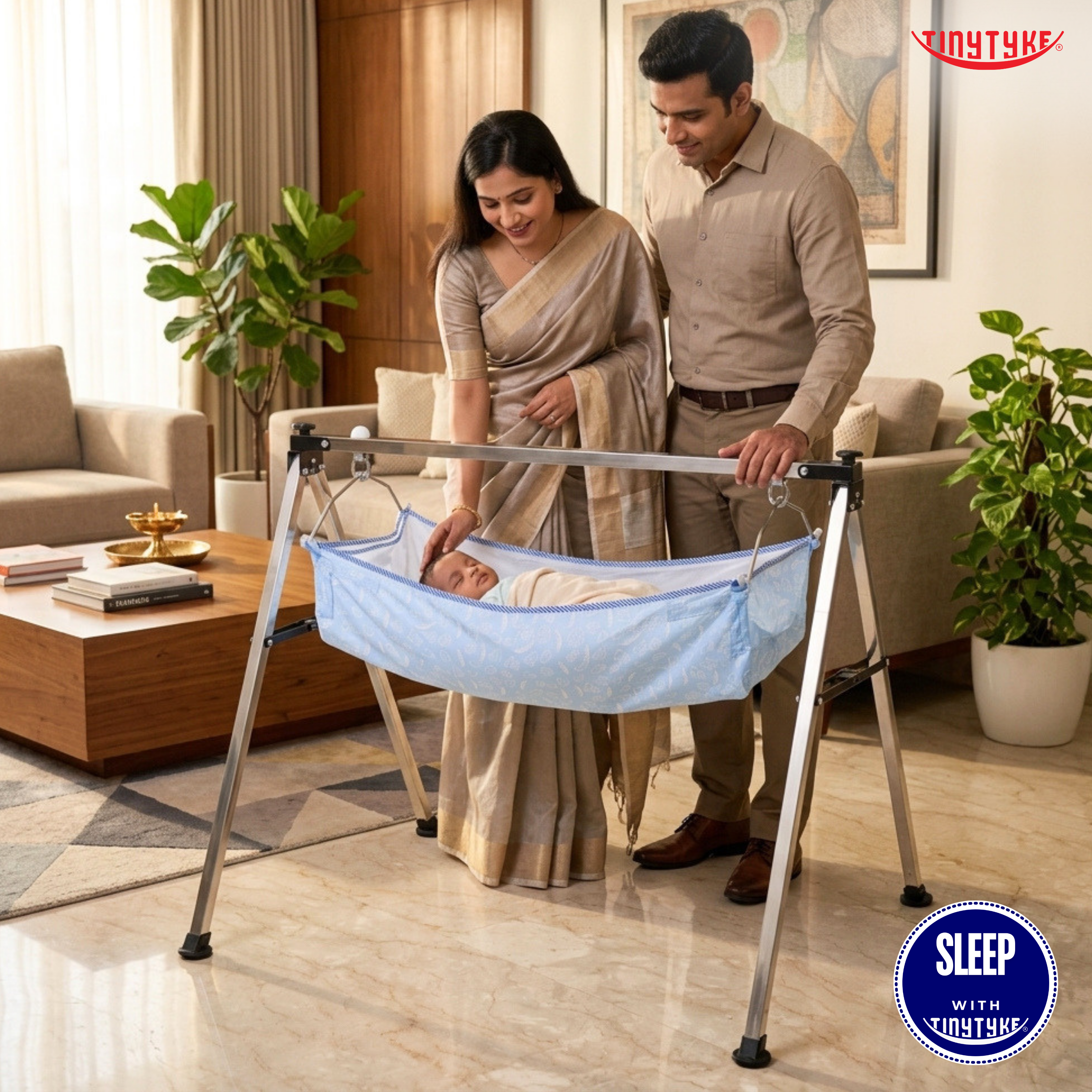
If you currently use a traditional ghodiyu, jhula or baby cradle, manually rocking the cradle can become tiring.
Especially when your baby needs repeated soothing.
This is where an automatic baby cradle can provide convenience.
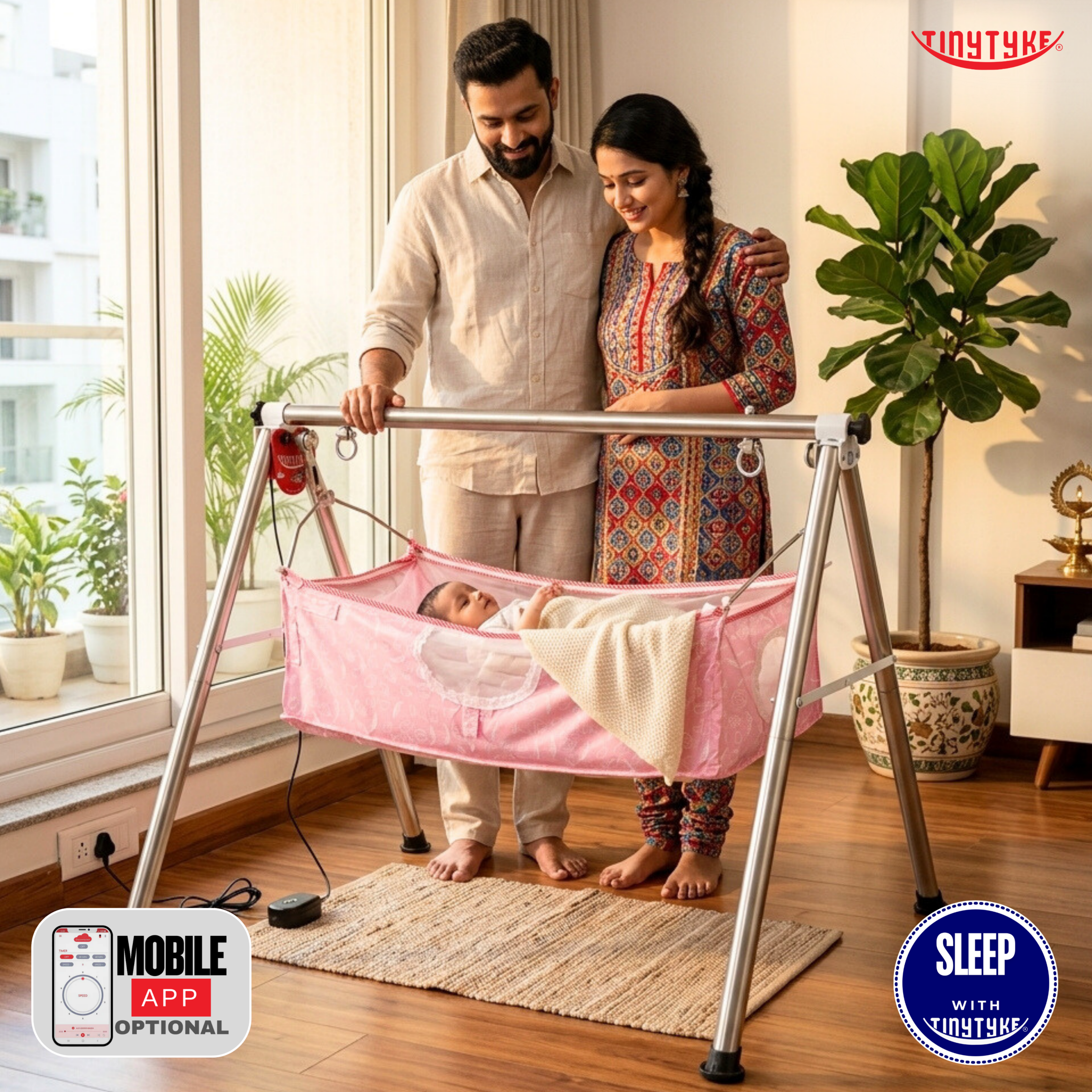
Instead of manually rocking the cradle continuously, an automatic cradle uses a motorized mechanism to provide rocking movement.
However, parents should always use the product according to its specific instructions, age and weight limits, and intended use.
Can an Automatic Baby Cradle Make Things Easier?
For parents who already use a traditional cradle, an automatic baby cradle can reduce the need for continuous manual rocking.
Depending on the model, features may include:
- Adjustable rocking speed
- Timer
- Music
- Mobile-app control
- Power-bank compatibility
Features vary between models, so parents should always check the individual product specifications.
For Indian parents familiar with the traditional ghodiyu or jhula, an automatic cradle combines a familiar concept with modern convenience.
Explore TinyTyke Automatic Baby Cradles
👉 View TinyTyke Automatic Baby Cradles
What About a Traditional Indian Ghodiyu?
For many Indian families, the ghodiyu, jhula or palna is a familiar part of newborn care.
Today, parents can choose between traditional manual cradles and modern automatic options.
If you already have a traditional cradle and want to reduce the effort of manually rocking it, an automation kit may be another option to consider.
Already Have a Manual Cradle?
TinyTyke's Cradle Automation Kit is designed for compatible cradle frames and can help convert a compatible manual cradle into an automatic cradle.
👉 Explore TinyTyke Cradle Automation Kit
How to Choose an Automatic Baby Cradle
If you're searching for an automatic baby cradle in India, don't choose one only based on appearance.
Consider these factors:
1. Age and Weight Range
Always check the manufacturer's recommended age and weight limits.
2. Cradle Construction
Check the frame, suspension system and overall construction.
3. Movement Settings
Look for movement controls appropriate to the product's intended use.
4. Timer
A timer can provide additional convenience when available.
5. Power Options
Check the product's power requirements and available power options.
6. Safety Instructions
Read the manufacturer's instructions before using the product.
7. Warranty and Support
After-sales service can be important when purchasing a motorized baby product.
Read Our Complete Guide
👉 Automatic Baby Cradle Buying Guide
Important Baby Sleep Safety Reminder
An automatic cradle should not automatically be considered a safe sleep space simply because it provides rocking movement.
Safety depends on the specific product, design, intended use, baby's age and weight, and manufacturer's instructions.
For evidence-based guidance, parents can also refer to the American Academy of Pediatrics' safe sleep recommendations .
Parents should:
- Follow the manufacturer's instructions.
- Follow the product's age and weight limits.
- Use the product only for its intended purpose.
- Follow current safe-sleep guidance.
- Speak with a pediatrician if they have concerns about their baby's sleep.
- For more information, read:
👉 Creating a Safe Sleep Environment for Your Baby
Frequently Asked Questions
Why does my baby wake up every time I put them down?
Your baby may wake because of changes in movement, position, temperature, touch or sleep stage. Hunger or discomfort can also cause waking.
Why does my baby only sleep in my arms?
Your baby may associate your warmth, smell, touch and movement with comfort. This can be especially common during early infancy.
How can I put my baby down without waking them?
Try a slow and gentle transfer when your baby is settled. Keep the environment quiet and maintain a consistent bedtime routine.
For more practical information about newborn sleep and bedtime routines, parents can also read the NHS guide to helping your baby sleep .
Why does my newborn wake up immediately after being put down?
Newborns have developing sleep patterns and can be sensitive to changes in movement, position and environment.
Why does my baby sleep better when rocked?
Gentle rhythmic movement can be soothing for some babies. Your baby may also associate rocking with comfort and falling asleep.
What is an automatic baby cradle?
An automatic baby cradle uses a motorized mechanism to provide rocking movement, reducing the need for continuous manual rocking.
What is an automatic ghodiyu?
An automatic ghodiyu is a modern motorized version of the traditional Indian baby cradle or jhula.
Can I convert my manual cradle into an automatic cradle?
Some manual cradles may be compatible with an automation kit. TinyTyke offers an automation kit for compatible cradle designs.
👉 Check TinyTyke Cradle Automation Kit
Final Thoughts
If your baby wakes up every time you put them down, you're not alone.
Your baby may simply be responding to a change in movement, warmth, touch, position or sleep stage.
Instead of chasing a perfect sleep routine, focus on creating a calm, consistent and responsive routine.
And if manual rocking has become tiring, an automatic baby cradle may offer an extra layer of convenience for parents who find gentle rocking helpful.
Because sometimes parenting doesn't need to be perfect.
Sometimes you just need a little help. ❤️
Explore TinyTyke
🛏️ Shop Automatic Baby Cradles